News & Trends
Bhutan’s Path to Mindful Progress

Bhutan stands as the world’s only carbon-negative nation, a clear reminder that development and responsibility can go hand in hand. The kingdom measures progress by the well-being of its people and shows that a society can shape its future when growth, technology, and values align.
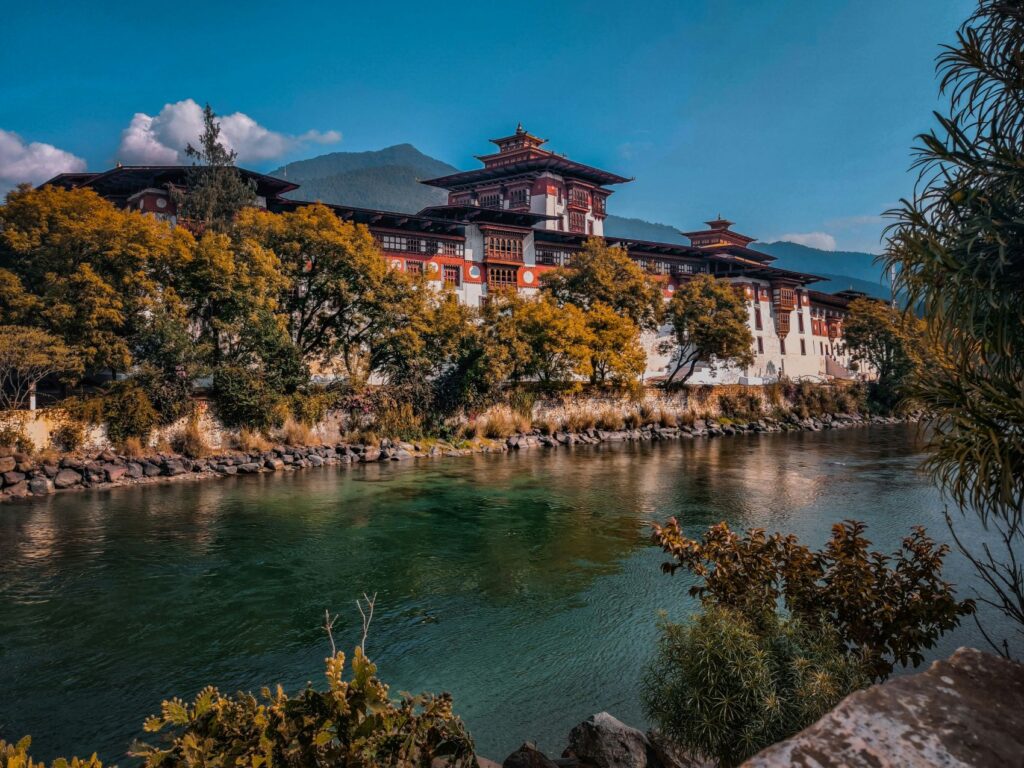
In the early morning, mist still drapes the hills around Thimphu, Bhutan’s capital. Between colourful prayer flags and white stupas, the scent of incense blends with the signals of a digital future.
The country has enshrined happiness as a national mission. In 2008, the concept of gross national happiness (GNH) was incorporated into the constitution. It replaces GDP as the sole measure of prosperity and assesses the state of the nation based on quality of life, sustainability, and social cohesion. Nine domains form the framework: from education and health to culture and good governance – meaning responsible and transparent leadership. Together, they create an index that reveals how closely economic growth is tied to social balance.
Today, Bhutan is undergoing a profound transformation. The sovereign wealth fund DHI is investing in renewable energy, digital infrastructure, start-ups, and education – all in line with the principles of gross national happiness. The goal is an economic model that unites innovation with the common good, offering an alternative to growth-driven globalization.
The city of mindfulness
A prime example is Gelephu Mindfulness City in the south of the country. This planned city aims to prove that progress can be designed with intention. Its planning and construction follow the values of GNH, ensuring a careful balance between quality of life, environment, and innovation.
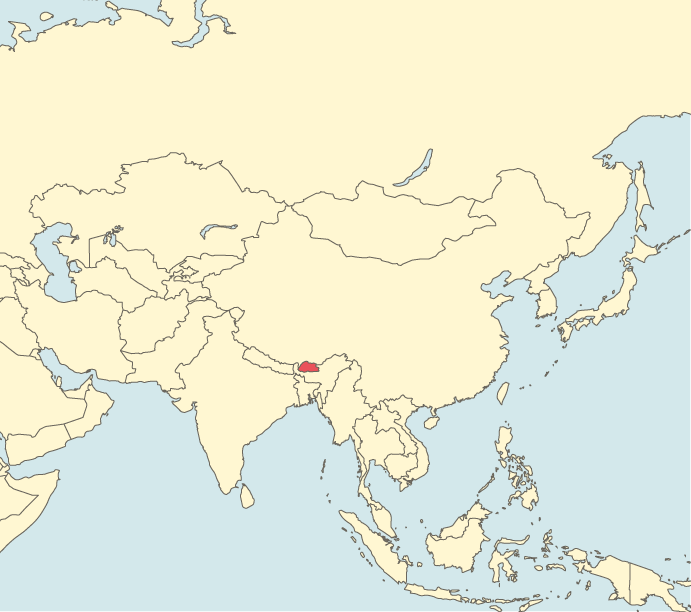
Bhutan at a glance
Area: 38,600 km²
Population: approx. 800,000
Capital: Thimphu
Form of government: constitutional monarchy
Sustainability: Bhutan is the only CO2-negative country in the world
National goal: gross national happiness (GNH) instead of gross domestic product (GDP)
Two visionaries in conversation
In Thimphu, Globalance founder and CEO Reto Ringger spoke with Ujjwal Deep Dahal, CEO of Bhutan’s sovereign wealth fund DHI, about Bhutan’s path toward aligning growth, technology, and the common good.
Biography
Ujjwal Deep Dahal serves as CEO of Bhutan’s sovereign wealth fund DHI. An engineer, he studied at institutions including the Massachusetts Institute of Technology in Boston. The fund holds 15 percent of its digital assets in cryptocurrencies.
Reto Ringger:
To start, how would you describe Bhutan to someone who has never been here, especially compared to Europe?
Ujjwal Deep Dahal:
If you search for Bhutan, you will quickly find references to Gross National Happiness (GNH). I see it as a governance philosophy and an alternative to GDP. It was conceptualized in Bhutan by His Majesty the Fourth King. Bhutan has also shown strong leadership in environmental conservation for decades. We have about 70 percent forest cover, and our Constitution mandates at least 60 percent at all times.
Gross National Happiness and environmental conservation are central pillars. Our economy is built on hydropower, tourism and agriculture. We consider happiness as important as economic development, which is why GNH has four pillars, not only economic.
At the same time, we face challenges. Many young Bhutanese go abroad seeking better opportunities. It is important for us to stay connected to global developments and provide opportunities and quality of life here, while maintaining what makes Bhutan unique.
Today, the vision of His Majesty the Fifth King includes a Special Administrative Region called the Gelephu Mindfulness City, designed to create a thriving and mindful economic environment. It builds on our strengths while introducing progressive development. DHI was established when Bhutan transitioned to parliamentary democracy in 2007 as the sovereign wealth fund. We operate independently with our own governance.
Reto Ringger:
How is the DHI funded?
Ujjwal Deep Dahal:
When DHI was created, strategic sectors were placed under us, such as hydropower generation, transmission, telecom, airlines and others. Today, we contribute around 40 percent of government revenue and about 25 percent of GDP through taxes, dividends and royalties.
«Gross National Happiness is a governance philosophy and an alternative to GDP.»
Reto Ringger:
This combination of environmental protection and Gross National Happiness: is it rooted more in Buddhism or in the monarchy?
Ujjwal Deep Dahal:
Buddhism influences our way of life, but equally important is the credible leadership of our monarchs. In Bhutan, the monarchy is not only respected, it is loved. Strong leadership and our heritage anchor these values. Environmental conservation is a result of good governance and vision.
GNH in action now includes creating a mindful city that resonates with younger generations. Culture must evolve to stay alive. That is the progressive thinking behind this.
Reto Ringger:
So it would be difficult for other countries to copy this model because they do not share the same context?
Ujjwal Deep Dahal:
Every country has its own context. We hope Bhutan can be an inspiration. Others can adopt what works naturally for them.
Reto Ringger:
When did you start the Happiness Index?
Ujjwal Deep Dahal:
The concept was introduced in the 1970s by His Majesty the Fourth King.
Reto Ringger:
Over these decades, what did you learn? What worked well and what would you do differently?
Ujjwal Deep Dahal:
This is my personal interpretation. GNH has four pillars: economy, environmental conservation, culture and good governance. Whether you make decisions as an individual, as a family, or as a government, you consider these pillars together.
The challenge comes when trying to measure happiness with numbers. Happiness is not always quantifiable. My question is whether we need to operationalize at that level, or keep GNH as a guiding North Star. The essence is to guide decisions toward positive impact and quality of life.
Reto Ringger:
How does the population see this? Do people understand and support it?
Ujjwal Deep Dahal:
In general, yes. The concept is also taught in schools and introduced in workplaces. People may interpret it differently, but it is familiar and part of our national identity. Surveys are conducted about every five years by the Center for Bhutan Studies.
Reto Ringger:
How does this influence your role as CEO?
Ujjwal Deep Dahal:
There are clear values. We do not invest in tobacco or gambling, for example. If we invest in hydropower, we consider community benefits and environmental protection. The philosophy helps us make decisions that lead to long term sustainability and regeneration. It is a holistic lens, not only financial.
Reto Ringger:
Your 10x journey: how did it develop and what is its objective?
Ujjwal Deep Dahal:
DHI contributes about 40 percent of government revenue. We must lead the future economy, not only manage existing companies. The 10x strategy has three pillars:
- Portfolio management of 25 companies, including governance, capital allocation and talent development. We are active shareholders with board representation and long term strategy plans.
- Investment strategy for the next 10 years with a target of more than USD 40 billion. Around USD 25 billion will be in hydropower and solar. We focus on energy, minerals, forests, water, infrastructure, global securities, manufacturing and services such as education and health.
- Innovation strategy to build a startup ecosystem. We have proof-of-concept teams, a Super Fab Lab with MIT and are creating a multi-channel innovation fund. We integrate global and local founders, innovators and academics.
The goal is to transform Bhutan into a diversified innovation economy and attract young Bhutanese back home. We call it 10x not only for revenue, but for mindset, leadership and ambition.
We also have three supporting strategies: technology, talent and financing.
Reto Ringger:
You also have a time horizon of 10 years?
Ujjwal Deep Dahal:
Yes. If we create one major new industry or one unicorn, we could meet the target. Hydropower expansion alone could also achieve it. But the real goal is long term capability and resilience.
«Innovation is how we attract young Bhutanese to build at home.»
Reto Ringger:
Bhutan faces the challenge of keeping young talent. I spoke to young Bhutanese on the plane who study abroad and return only briefly. They are watching this development closely.
Ujjwal Deep Dahal:
Exactly. Our 10x strategy aligns with the governments 21st Century Economic Roadmap, and the Gelephu Mindfulness City is part of this vision. We build step by step toward a vibrant future economy that resonates with younger generations.
Reto Ringger:
Where does the Gelephu Mindfulness City fit into this plan?
Ujjwal Deep Dahal:
It is a Special Administrative Region, essentially a startup city with sovereign powers, designed by His Majesty to accelerate progress while preserving Bhutanese values. It has its own governance and judiciary. An international airport and railway link to India are under development. The city will focus on green energy, agri-tech, forestry, fintech, spirituality, aviation, logistics and tourism. No polluting industries.
In 40 years, the country will converge again into one system. This allows rapid experimentation and learning, then integration.
DHI supports by bringing in investors, building infrastructure and providing expertise.
Reto Ringger:
How do AI and blockchain fit into your strategy?
Ujjwal Deep Dahal:
They are central. Bhutan already launched a national digital identity system based on blockchain. We are building capacity in AI engineering, exploring tokenization of resources and considering long term opportunities.
We believe future industries will merge digital, physical and biological systems, for example robotics with intelligent autonomous systems. We look at how Bhutan can participate meaningfully in global value chains. We have a long runway and must start now.
Reto Ringger:
Do you see international interest in what you are doing?
Ujjwal Deep Dahal:
Yes. We need global partners. This journey cannot be done alone. We built this strategy ourselves rather than outsourcing it, but now we want partners who resonate with the mission and can help build it sustainably.
Reto Ringger:
Final question. If you had one wish for the next 10 years, what would it be?
Ujjwal Deep Dahal:
To see a vibrant innovation ecosystem grow, one where young people have real opportunities to build, fail, learn and succeed. A place where entrepreneurship is natural, not exceptional. If students say, I will build something here, and the system supports them, that would be a milestone. Success stories will inspire others and create momentum.

What can Switzerland learn from Bhutan?
- Holistic thinking: progress is measured by quality of life, not just growth.
- Responsible economics: success is not an end in itself but a means to the common.
- Long-term perspective: politics and business are guided by the interests of multiple.
- Balance of innovation and purpose: technology should connect, not alienate.
Discover the entire issue
Read more articles from our current issue: ‘Intelligence: the new force powering our world’.
Be part of the solution and stay informed with the Futuremover.
Subscribe now and shape the future!
Magazin abonnieren EN
"*" indicates required fields


