News & Trends
The new economy of intelligence

Artificial intelligence is reshaping the foundations of our economy. New value chains emerge while old models lose ground. The question is no longer whether AI changes the economy, but how deeply.
Two people and a laptop – that is often enough today. With tools like Replit or Lovable, software can be built in minutes that, only two years ago, required a full engineering team. What once demanded capital and time is now available at a click, shifting where value is created.
The cost of efficiency
Producing knowledge costs almost nothing. Entire industries are in motion because productivity surges and markets reorganize. As knowledge flows more freely, the networks that carry it grow more expensive – the data centres, chips, and clouds that keep progress running. AI not only shifts where value is created, it also shifts where it is consumed.
What began as assistance for individual tasks is becoming the operating system of entire companies. Insurers automate claims assessments, banks evaluate credit risks with algorithms, and law firms test digital assistants. Around these applications, new ecosystems emerge: AI platforms provide the base models on which start-ups build specialized solutions – in fields from medicine and education to energy and mobility.
Sixty percent of jobs will change – but one hundred percent of people must rethink.
New work – new responsibility
AI does not only accelerate existing processes. It opens new possibilities. In medicine, it helps personalize therapies. In schools, children learn with AI tutors that adapt to their pace. In factories, machines increasingly steer themselves and react to demand or material flow. Organizations become networks of people, machines, and data. Work becomes less routine – and more design.
What remains human?
AI changes how we work and how much we work. Some gain time, others lose income. The challenge is balancing both. Only one in five employees worldwide feels engaged at work, according to Gallup. If AI takes over routine tasks, it could create space for meaning, learning, and creativity – or leave a void if work is the main source of identity and community.
Creativity, empathy, and a sense of responsibility gain importance. Economists speak of a redistribution of work: toward activities that matter for humans, not only for efficiency. And they raise new questions: How will income be created when machines produce knowledge? What remains the human contribution when physical labour and routine lose relevance?
The power of platforms
The infrastructure of the AI economy is shaped by a few large platforms that supply computing power, data, and standards for innovation. For many companies, access to progress depends on access to these services.
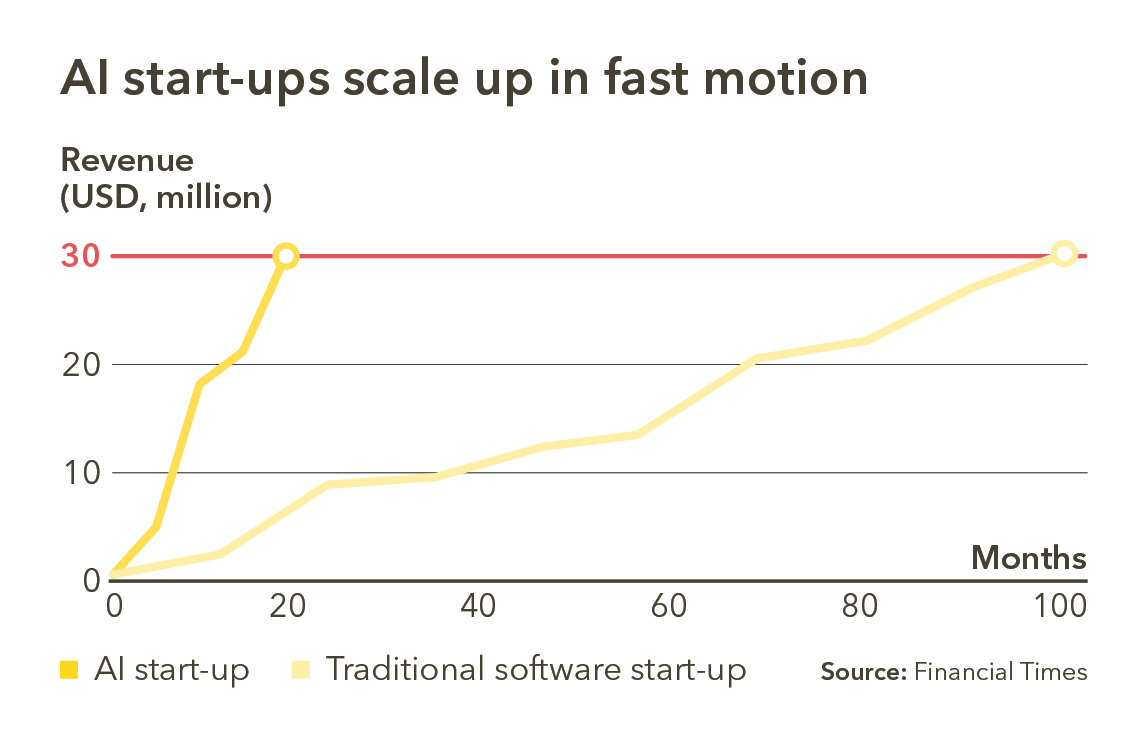
A growing share of value shifts to the places that control the infrastructure – not to the places that only use it. Global productivity increases, yet taxes, pensions, and social systems remain national. States face a dilemma: revenues shrink while new forms of social protection become necessary.
The International Monetary Fund warns: as value creation becomes more digital and cross-border, tax and regulatory systems must adapt to maintain fairness and stability.
AI changes not only how we work – it changes what work means to us.
The new logic of prosperity
Despite the risks, AI carries vast potential. It can raise prosperity, use resources more efficiently, and free people from routine tasks. What matters is what we do with the time we gain. Automation can open space for education, care work, or climate action. Or it can deepen inequality if gains are not shared.
OpenAI cofounder Sam Altman argues for new social models. He sees a universal basicincome as one possible answer to the productivity gains created by AI. But who should fund it? Perhaps those who benefit most from the new wealth. The question is not whether AI changes prosperity – but whether it makes it more equitable.
Opportunities outweigh the risks
Risks
- Energy and data demands rise.
- Power and profits concentrate in a few hands.
- Transparency and responsibility lag behind technology.
Opportunities
- Data helps to use resources more efficiently.
- Productivity rises, as routine work falls away.
- Education becomes more personal, knowledge more accessible.
- Innovation accelerates – from medicine to materials science.
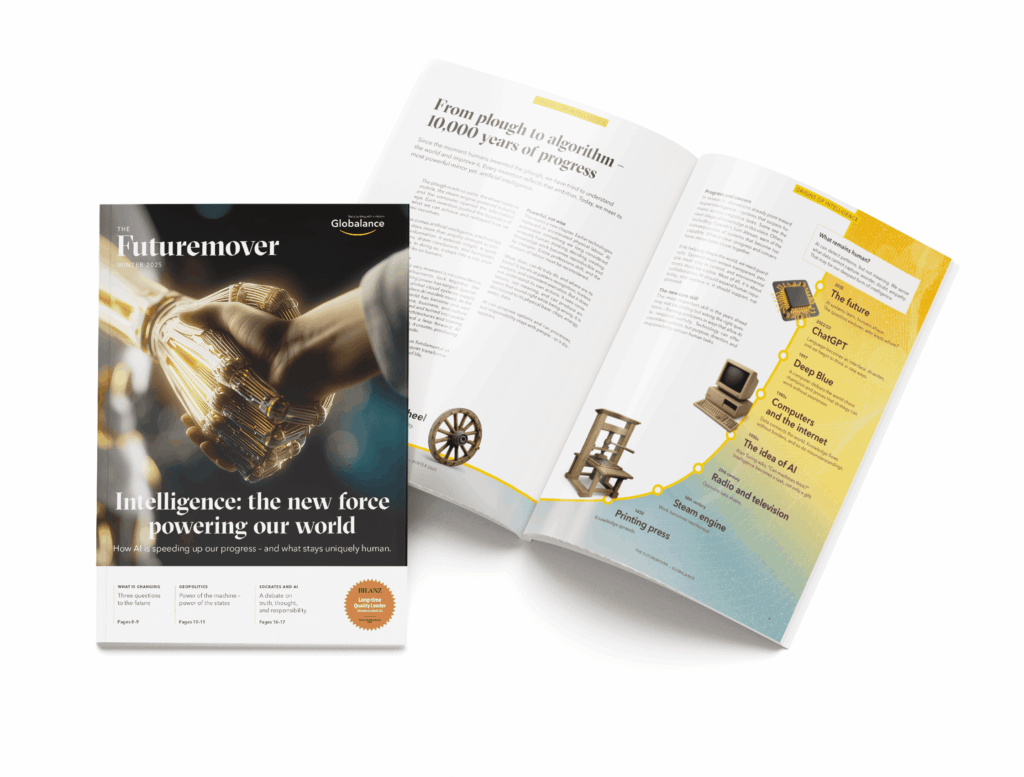
Discover the entire issue
Read more articles from our current issue: ‘Intelligence: the new force powering our world’.
Be part of the solution and stay informed with the Futuremover.
Subscribe now and shape the future!
Magazin abonnieren EN
"*" indicates required fields


