News & Trends
The future of medicine begins in the eye

The entire body – and perhaps the future of medicine – is reflected in the eye. In Zurich, a digital eye clinic is taking shape that aims to use artificial intelligence to detect diseases before they develop.
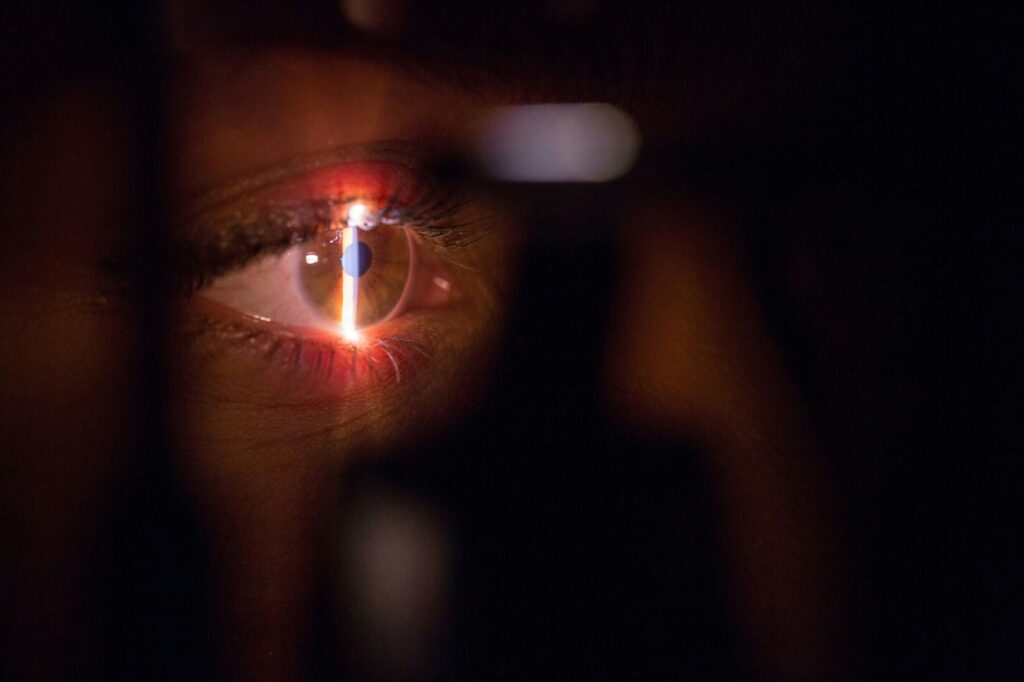
In a darkened room at Zurich City Hospital, a retina flickers across the screen: glowing red, threaded with fine vessels – almost like an unknown planet. “This is no ordinary photograph,” says Dr. Gábor Márk Somfai. “It’s a window into the body.”
The senior physician and his six-member team are working to make the invisible visible: early signs that point to disease long before symptoms appear. For now, there are no patients, no consultations – only data, discussions, and the ambition to rethink medicine from the ground up.
The idea – medical innovation
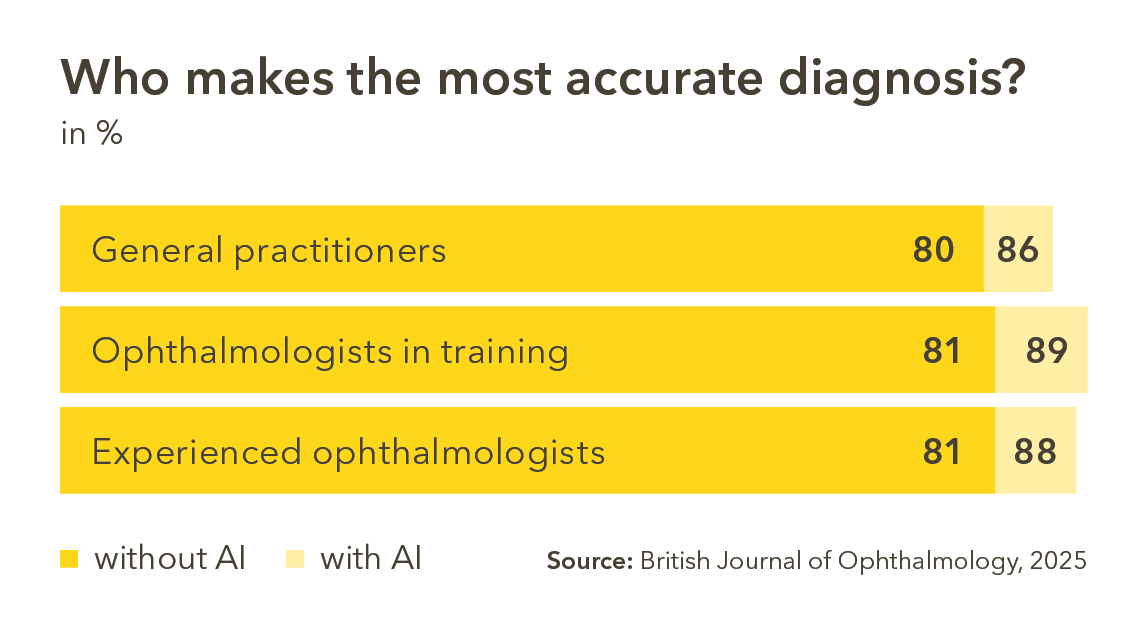
The idea: AI should be able to detect, within retinal patterns, not only signs of various eye diseases but also indications of diabetes, cardiovascular conditions, and dementia. In Hong Kong, such screening is already part of everyday clinical practice, and in Beijing, a hospital staffed with 42 AI agents has just opened. Zurich, by contrast, is proceeding more cautiously: test first, act later. “We don’t want cowboy AI,” he says. “We want to set standards.”
Implementation – collaboration and AI integration
This is about more than technology. Ophthalmology faces a personnel shortage, and routine tasks eat up valuable time. Physicians often spend half their day on documentation instead of with patients. Somfai calls this “keyboard liberation”: AI should sort findings, summarize conversations, and analyse images – so medicine can look up again.
People at the centre – ethics and the future
Before the digital eye clinic goes live, key legal, technical, and ethical questions need to be resolved. Who owns the data? Where may it be stored? How do you build trust? The team is addressing these questions in an AI sandbox – a protected testing environment supported by the Canton of Zurich. At the same time, it is collaborating with partner clinics worldwide to develop shared standards for the safe use of AI.
At the end of the day, Dr. Gábor Márk Somfai shuts down the computer. The retinal image fades, the room grows quiet. “We’re only at the beginning,” he says. “But perhaps this technology will bring us closer to what truly matters – the human being.” For a moment, his own eye reflects faintly in the black screen – along with a trace of optimism.
Interview with Dr. Gábor Márk Somfai
Dr. Gábor Márk Somfai heads the Spross Research Institute at the Department of Ophthalmology of Stadtspital Zürich and, together with his team, is developing Switzerland’s first Digital Eye Clinic. In this interview, he explains how artificial intelligence is meant to support doctors — and why trust matters more than speed.
Gábor Márk Somfai, you’re currently building a Digital Eye Clinic. How did this idea come about?
Even during my earlier research, I wondered whether the eye can reveal more than we currently see. Shakespeare said the eye is the window to the soul. I believe it is also a window to the body. Many diseases are reflected in the retina — from Alzheimer’s and Parkinson’s to diabetes and cardiovascular disorders. If we can detect them early, before symptoms appear, we can protect people instead of merely reacting.
In Hong Kong, such early detection using AI is already part of daily clinical practice. You’ve been following the project from Zurich — what fascinates you about it?
There, patients are photographed, and within an hour a report is generated assessing the risk of dementia or other diseases. That’s fascinating — but also risky. We must understand exactly how such systems work before adopting them. In Zurich, we don’t want cowboy AI — we want to set standards.
How do you differ from these faster pioneers?
We take a more cautious approach. The Canton of Zurich supports us through an AI sandbox — a protected testing environment for new applications. Our goal is to clarify legal, technical, and ethical questions thoroughly: Who owns the data? Where may it be stored? How do we build trust? Only once these issues are resolved will we introduce AI-assisted diagnostics into daily practice.
You mention trust in AI. Is that the biggest hurdle?
Yes. The technology is advanced, but society remains skeptical. We conducted surveys among doctors, patients, and regulatory authorities. Many respond cautiously, some even negatively — which I understand, since it involves sensitive health data. Even though much is being invested in cloud solutions, we can’t simply store patient data there. We must prove that these systems are secure. That takes time — and patience.
What can AI actually do in a hospital setting?
I’d highlight three things. First, AI can reduce the burden of documentation — doctors spend hours in front of computers. We call this keyboard liberation: bringing the human back to the human. Second, AI can pre-analyze images, detecting tiny retinal changes that a human might easily miss. Third, it can summarize patient histories so we can understand more quickly what really matters.
«AI is not a tool. It is our co-pilot.»
Does that mean AI will eventually replace doctors?
No, absolutely not. AI is a co-pilot, not a captain. Doctors carry the responsibility. I like to compare it to a cockpit: in the past, pilots flew analog, today they fly digital — but responsibility still lies with the pilot. Likewise, we must understand what AI systems can do and where their limits are.
What limits do you have in mind?
For example: garbage in, garbage out. If we feed the AI with poor data, we get poor results. This effect is often underestimated. We’re currently studying how precise different algorithms are and what level of image quality is necessary to make reliable diagnoses. Only then can we avoid the errors and inaccuracies that arise from incomplete datasets.
You speak with a certain urgency. Where does that come from?
Because medicine is reaching its limits. In Switzerland alone, about 400,000 people with diabetes should be examined by an ophthalmologist every year — an almost unmanageable number. At the same time, the population is aging, diseases are increasing, and staff are lacking. We must find new ways to relieve the system. AI can help — but only if used responsibly.
You collaborate with eye clinics around the world. How far along is Zurich in international comparison?
We’re smaller, but very thorough. In London and Singapore, colleagues are developing new foundational AI models for ophthalmology, and we work closely with them. In Beijing, a hospital has just opened where 42 AI agents assist doctors or make diagnoses. But such systems can’t simply be copied — every country has its own rules, standards, and values. Our approach: learn and understand first, then implement. That’s how we create digitalization with responsibility.
What is your vision — the eye clinic of the future?
It won’t look futuristic. Patients will come to the clinic just as they do today and be greeted kindly — perhaps by an avatar, perhaps by a person. But in the background, digital assistants will analyze data, interpret images, and document conversations. This will give doctors the freedom to focus on what truly matters: the person in front of them.
And when will this become reality?
We expect two phases. Within a year, we aim to build the testing environment. In two to three years, the first practical applications should be possible. For us, this is like a new flight with a new cockpit — but the pilot remains human.
You sound like someone with big plans.
Yes. We’re a small team, but we think big. I hope that one day we can show: digitalization is not the end of humanity in medicine — it’s its next stage.
The team behind the vision
A small team of specialists forms the Digital Eye Clinic at Stadtspital Zürich Triemli. Through in-depth research, they connect medicine, engineering, and artificial intelligence with society — from image analysis and machine learning to data security. Their shared goal: to develop technologies that relieve doctors and help patients earlier.
Discover the entire issue
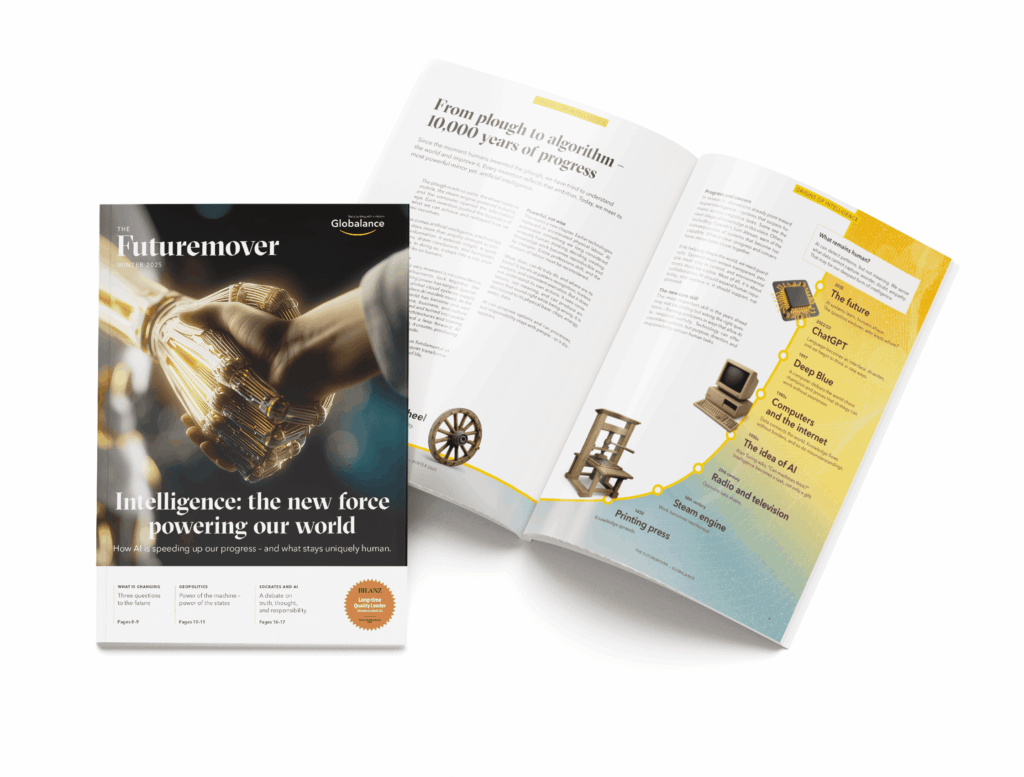
Read more articles from our current issue: ‘Intelligence: the new force powering our world’.
Be part of the solution and stay informed with the Futuremover.
Subscribe now and shape the future!
Magazin abonnieren EN
"*" indicates required fields


