News & Trends
Robotics Investment Opportunity: The Next Wave of Automation

Robots take on hazardous work, fill gaps caused by skilled labor shortages, and make reshoring economically viable. What sounds like science fiction is already a reality and a structural investment theme for the decades ahead.
The Rise of Robotics
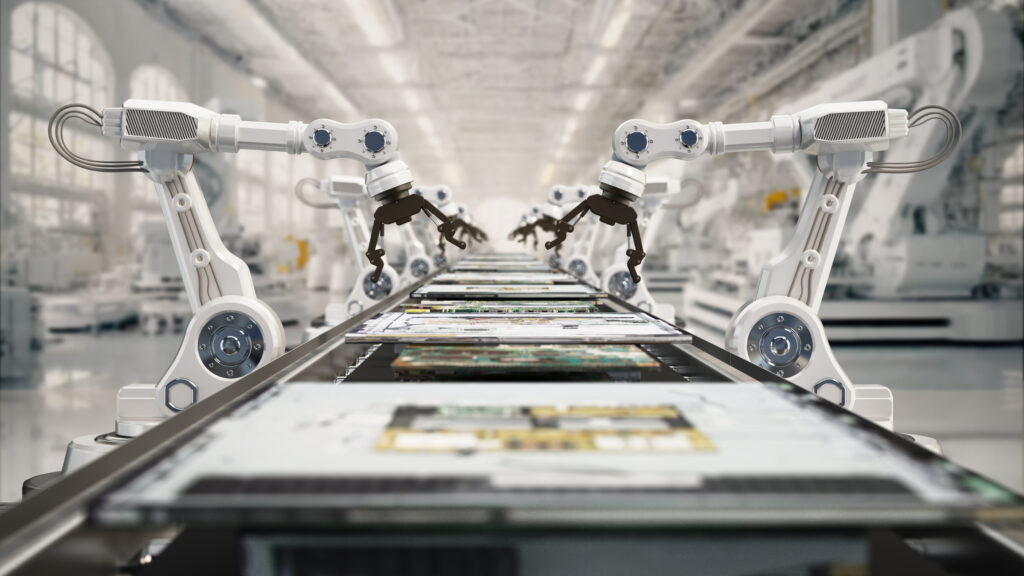
Europe, the United States, and China face shortages of millions of skilled workers. At the same time, pressure to increase efficiency and reshore production is prompting companies to bring manufacturing closer to home, which is often economically viable only through automation. This is accelerating a new global race to automate. China now accounts for around 40 percent of the global robotics market and has quadrupled the density of robots in its factories in just six years.
Newly Installed Industrial Robots per Year
The United States is catching up, particularly in the logistics and technology segments, with autonomous warehouse robots, AI platforms, and cloud-based robotics. Artificial intelligence is the key catalyst behind this development. For the first time, it enables robots to perform tasks requiring fine motor skills, respond to context, make autonomous decisions, and learn by doing.
Developments that once took decades are now a reality in pilot factories. Humanoid robots are a particularly dynamic, though still emerging, segment. While the market remains small today, Goldman Sachs estimates that it could grow many times over by 2030, with humanoid robots initially becoming commercially viable in industrial settings.
South Korea leads the world in robots per employee, followed by Singapore, Germany, and Japan.
Why Invest in Robotics?
Robotics is part of the digitization and automation megatrend, driven by demographic change, AI, urbanization, and the energy transition. Early investors can benefit from one of the strongest growth drivers of the coming decades.
Seizing Opportunities
- 12–20 percent CAGR across multiple segments: structural rather than cyclical growth
- Robotics as a Service lowers barriers to adoption: companies can rent robots instead of buying them, similar to software subscriptions
- Resilience: companies that automate early are better equipped to withstand shocks than their competitors
- Cross-industry technology: relevant in fields ranging from agriculture to space exploration
Understanding the Risks
- Rising energy demand from mobile systems: efficiency solutions are essential
- Regulation: the EU AI Act, safety standards, and product liability frameworks are still evolving
- Dependencies: semiconductors, sensors, and critical components
- Retraining needs: the displacement of routine jobs requires forward-looking workforce planning
- Cybersecurity: connected systems create a growing digital attack surface
How Robotics Is Becoming a Reality
Four companies in the Globalance portfolio illustrate how robotics is already being used in practice today.
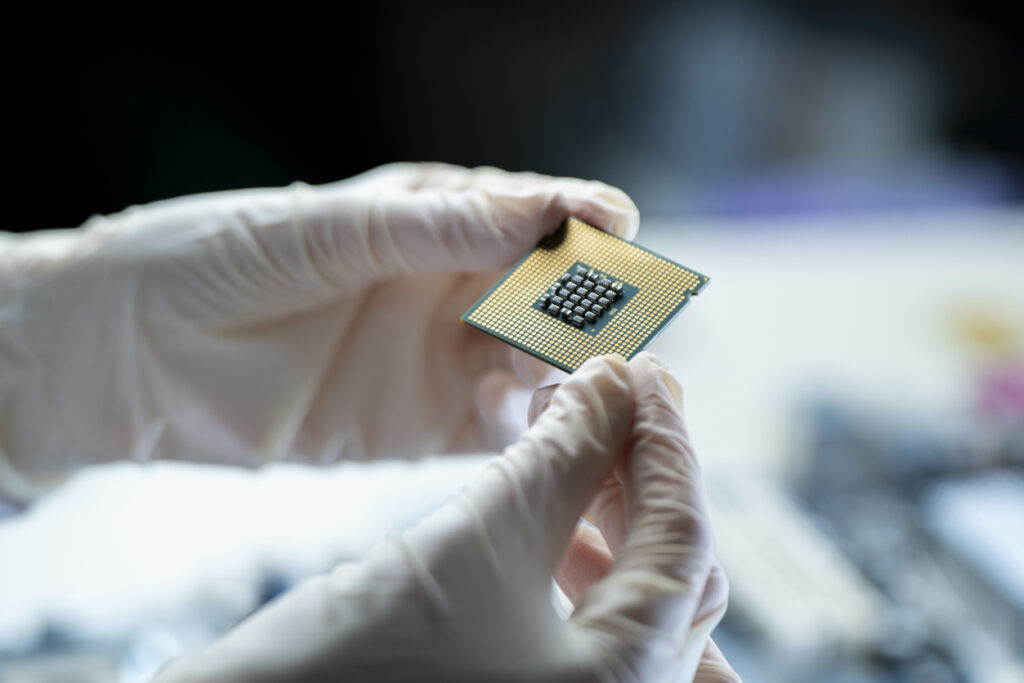
ASML
Without ASML machines, there would be no chips. Without chips, there would be no robot brains. ASML’s lithography systems are the only machines in the world capable of producing the advanced semiconductors that power AI and robotics. Every system embodies robotics engineering at the highest level.
NVIDIA: The Brain Behind the Robots
NVIDIA has evolved from a chipmaker into the operating system for the world of robotics. With the GR00T foundation model, the Jetson Thor robotics computer, and the Isaac platform, NVIDIA provides the complete nervous system for humanoid and industrial robots. More than 250,000 robotics developers worldwide build on NVIDIA platforms.

ALPHABET: The Operating System for Robotics
Google DeepMind launched Gemini Robotics, an AI model that enables humanoid robots to be controlled through natural language. At the same time, Alphabet integrated its robotics software company Intrinsic into Google, with the stated goal of becoming the “Android of robotics”: an open platform, broad partnerships, and industrial scale. Remarkably, Intrinsic and Google DeepMind have developed an AI system that allows up to eight robotic arms to work together without collisions, operating 60 percent faster than a four-arm setup.
AMAZON: Giving Robots a True Sense of Touch
Amazon operates more than one million robots across its fulfillment centers. In 2025, the company introduced Vulcan, its first robot with a true sense of touch. Using force sensors and physical AI training, Vulcan can grasp, sort, and store 75 percent of all items in inventory at human speed. Remarkably, Vulcan operates 20 hours a day and has already processed more than 500,000 orders.
Globalance View
The Footprint of Robotics Technologies
Robotics is a structural growth driver, but it is not a uniform investment theme with an inherently positive Footprint. Its impact is multifaceted and requires a nuanced assessment. Robotics shifts risks and value creation across a complex supply chain, from lithography equipment in Taiwan and rare earths from China to deployment in a US logistics facility.
This has two consequences that are crucial for assessing impact from an investor perspective. First, the Footprint of a robotics company is determined not by its industry alone, but by its position in the value chain, the design principles it follows, how it manages its supply chain and workforce, its area of application, and whether it assumes responsibility for the end of the product life cycle.
Second, short-term efficiency gains must be weighed against long-term structural disruptions, whether economic, social, or environmental, that may only become apparent over decades. The art of future-focused investing in a megatrend does not lie in simply buying into the trend, but in identifying the winners with the most resilient Footprint.
Economy – Predominantly Positive Impact
The economic impact of robotics is measurable and predominantly positive, but concentrated. AI-powered predictive maintenance identifies machine failures before they occur and, according to McKinsey and Deloitte, reduces unplanned downtime by 30 to 50 percent. At the same time, maintenance costs can be reduced by 18 to 25 percent. With industrial downtime costing an average of around USD 260,000 per hour, this translates into structural competitive advantages for early adopters. The reshoring advantage also helps mitigate geopolitical risks: production can be moved back to high-wage countries because automation largely offsets differences in labor costs.
At the same time, it is important to recognize that the robotics value chain depends on a small number of critical bottlenecks. China accounts for 85 percent of global rare-earth refining and magnet production capacity. Rare earths are essential for robots, particularly in the production of magnets. Neodymium-praseodymium oxide, for example, is the basis for extremely powerful magnets that enable robotic joints to perform fine, rapid movements with exceptional precision and high torque. Within one year, the price of neodymium-praseodymium oxide doubled from around USD 60,000 to more than USD 120,000 per kilogram. Semiconductor shortages and geopolitical disruptions since the pandemic have demonstrated just how vulnerable supply chains can be.
For investors, this means: Companies with diversified supply chains and substitution strategies face systematically lower operational risks than those that rely heavily on a single region or supplier.
This raises another question that is rarely discussed: Who bears the disposal costs at the end of a robot’s useful life? In most countries, industrial robots are not classified as electronic waste under current regulations. As a result, the full cost of disposal is neither accounted for nor priced in. The shift toward “Robotics as a Service” business models (renting rather than buying) is gradually transferring this responsibility to manufacturers, a development that is still barely reflected in current valuations.
Society – Between Job Displacement and Workforce Retraining
Robots take on tasks that put people at risk, such as inspecting high-voltage systems, working in contaminated environments, and performing repetitive heavy labor. At the same time, new professions are emerging, including robotics technicians, AI trainers, and systems integrators. These roles are generally better paid than the jobs they replace.
There is no simple answer to the central question of whether robotics creates more jobs than it eliminates, as the evidence varies considerably by region and over time. The World Economic Forum’s Future of Jobs Report 2025 projects that 170 million jobs will be created globally by 2030, while 92 million will be displaced, resulting in a net gain of 78 million jobs. However, this figure masks significant distributional effects. In the United States, one additional industrial robot per 1,000 workers reduces the local employment rate by 0.18 to 0.34 percentage points and wages by 0.25 to 0.5 percent. On average, one robot displaces around six jobs in the United States (Journal of Political Economy, 2020).
A German study presents a different picture. Between 1994 and 2014, robots displaced around 275,000 manufacturing jobs in Germany, accounting for 23 percent of the overall decline in industrial employment. However, these losses were fully offset by new jobs in the service sector (JEEA, 2021). One finding is particularly important: existing employees were largely protected, while the burden fell almost exclusively on young people entering the workforce, for whom fewer positions were available. The adaptability of a labor market, including retraining, cooperation between employers and employees, and the education system, therefore plays a decisive role in the outcome.
Over the long term, a structural pattern is emerging: labor’s share of overall economic income is declining because robots increase productivity but have little effect on wages. According to the WEF, 39 percent of the skills relevant today will become obsolete by 2030. The new jobs being created, such as robotics technicians, data specialists, and systems integrators, are better paid on average. However, without effective retraining programs, they remain out of reach for most displaced workers. The timing mismatch between displacement, which takes months, and retraining, which takes years, is the real social fault line.
From an investor perspective, this means: Companies that invest in retraining, fair transition programs, and transparent workforce transformation can significantly reduce regulatory and reputational risks. This factor is still not adequately reflected in conventional ESG ratings.
Environment – A Holistic Life Cycle Perspective
Assessing the environmental impact of robotics requires looking beyond the use phase and adopting a holistic life cycle perspective.
The efficiency gains during operation are real. Robots improve environmental performance in two structurally different areas. In manufacturing, more precise machines operate within tighter tolerances and generate less material waste. In semiconductor production, for example, micrometer-level precision determines how many wafers from each batch are usable. In deployment, such as the use of agricultural robots, spraying drones and field robots can reduce pesticide use by up to 90 percent compared with conventional methods through precise, targeted application.
However, the upstream costs are substantial. TSMC, which manufactures almost all advanced chips used for AI and robotics, accounted for around 7 percent of Taiwan’s electricity consumption in 2023. IDTechEx forecasts that the semiconductor industry’s water consumption will double by 2035. Robotics is also highly resource-intensive. A humanoid robot contains between 2 and 4 kilograms of rare-earth magnets, more than an electric vehicle, as well as 4.5 to 8.5 kilograms of copper and 1 to 3 kilograms of lithium. Morgan Stanley estimates that humanoid robots could generate around USD 800 billion in cumulative additional demand for critical minerals by 2050, placing further pressure on water resources, energy systems, and biodiversity. This highlights the importance of circular economy models and scalable recycling solutions.
The largest gap emerges at the end of a robot’s useful life. A 2025 study by the University of Bristol found that 80 percent of a robot’s environmental impact is already determined during the design phase. More than 80 percent of global electronic waste ends up in landfills or is incinerated, destroying valuable materials and releasing pollutants. According to the Fraunhofer Institute, global electronic waste could reach 74 million metric tons annually by 2030.
From an investor perspective, this creates clear criteria for differentiation: modular design, reprogrammability, take-back programs, transparent supply chains for critical raw materials, recycling rates, and the energy and water intensity of manufacturing.

“Robots increase productivity without a proportional increase in costs, a classic economies-of-scale effect. Companies that automate early gain a structural cost advantage over their competitors that grows stronger over time.”
Fabian Ottiger – Impact Research Manager
This article is for informational purposes only and does not constitute investment advice or a recommendation.
Be part of the solution and stay informed with The Futuremover.
Subscribe now and help shape the future!
Magazin abonnieren EN
"*" indicates required fields

Future-Check
We analyse your current portfolio for sustainability and future viability.