News & Trends
Even a Zero-Marginal-Cost Society Needs Energy

The electric car becomes a home battery, the solar installation becomes a miniature power plant, and the electricity bill approaches zero. What happens when electricity costs almost nothing? Who stands to gain, and where will bottlenecks emerge?
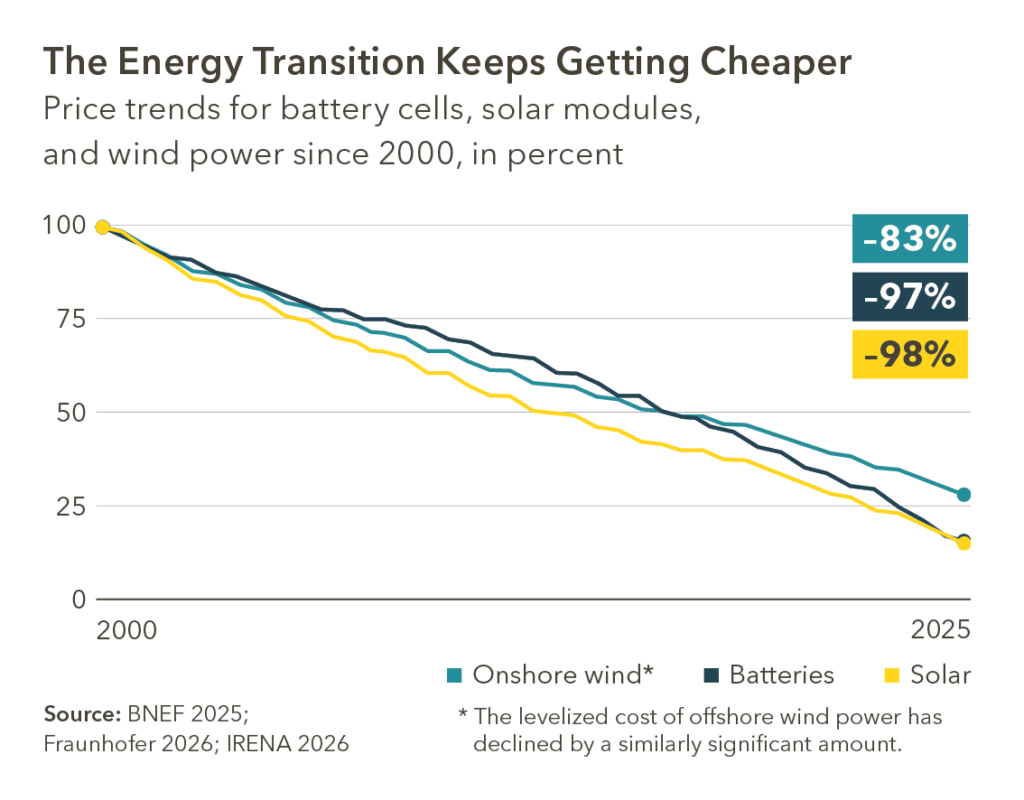
Oil prices are rising, yet sustainable energy is more affordable than ever. In recent years, the cost of generating solar and wind power has fallen dramatically. At the same time, global demand for energy has never been greater. AI is driving electricity consumption to unprecedented levels. What does this mean for us, both today and in the future? Where will value be created, and where will scarcity emerge?
Electricity Powers the Zero-Marginal-Cost Society
The digital world appears limitless. This is the central premise of the zero-marginal-cost society. Once an e-book has been written, it can be reproduced millions of times at no additional cost. At least, that is the theory.
The reality is somewhat different. A digital book may not require paper or printing presses, but it still has a footprint. Its journey from a digital desk to a Kindle passes through cables, antennas, and data centers.
Letters become bits and bytes, and stories become electrical signals. All of this requires electricity, as well as metals such as copper and lithium and rare earth elements. This is where the new scarcity emerges.
Renewable electricity production requires larger and more intelligent grids
50 Mio.
kilometers of new power lines must be built.
30 Mio.
kilometers of existing lines must be upgraded.
200
power lines to the moon is the equivalent.
The Energy Dilemma
Energy plays a dual role in the zero-marginal-cost society. The dilemma is that the more digital and intelligent our energy system becomes, the more energy it requires.
On the one hand, solar installations and smart home systems turn private households into power plants. In doing so, they democratize electricity generation and move costs for end users closer to zero. For this to work, one element in particular is still needed: smart storage.
On the other hand, shared infrastructure remains essential. Steel and concrete, power lines and transmission stations, and above all an increasing number of computers are still required to keep the entire system running.
Computing Power as Fuel
The new value in energy production lies in storing, transporting, and above all processing electricity. Computing power is the fuel, and data centers are the infrastructure. This infrastructure is currently expanding rapidly, including in Switzerland.
According to a study by the Swiss Federal Office of Energy, data centers currently account for approximately 3.6 percent of the country’s electricity consumption. By 2030, the study estimates that this figure could reach almost 6 percent. Other estimates put it as high as 15 percent. Will electricity become scarce?
“Switzerland currently still has available capacity in its electricity supply, unlike other European countries,” says Adrian Altenburger, co-author of the study and professor at Lucerne University of Applied Sciences and Arts. This could change quickly, particularly if Switzerland establishes itself as a center for AI because of its reliable electricity supply. “In that case, potential bottlenecks would be less likely to arise in electricity generation than in the grid and in seasonal storage capacity.”
To address these bottlenecks, Swissgrid is planning a major expansion, including a connection to the emerging European supergrid by 2040.
The data center boom is also accelerating the development of sustainable electricity generation, as demonstrated by the Metro-Campus Zurich in Dielsdorf.
Green.ch
In Dielsdorf, where farmers once cultivated their fields, Green.ch has built three high-performance data centers as part of the Metro-Campus Zurich. Green.ch originated from a Swiss Farmers’ Union project that provided internet access to remote rural areas.
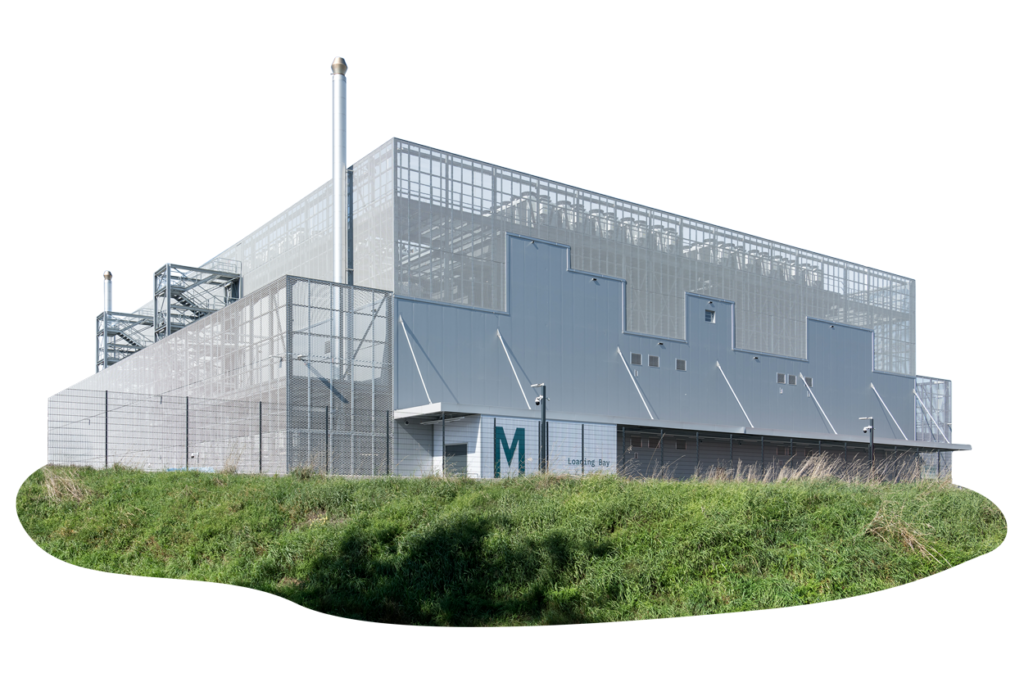
Today, the Metro-Campus Zurich stands out for a different reason. It uses the waste heat generated by its computers to supply a district heating network serving up to 3,500 households and nearby industrial facilities. In doing so, it turns waste into value.
Using Location to Our Advantage
The key energy lever of the future lies in intelligent use. The question is no longer simply whether energy is available. It is who can control, store, and prioritize it intelligently.
This creates new dependencies for Switzerland on raw materials and producers. At the same time, it opens up an opportunity. Industry follows electricity. Factories are built where power is affordable and reliably available.
As a result, particularly energy-intensive industries may undergo a regional realignment, moving away from fossil fuels and large markets and toward locations that can provide reliable and sustainable electricity.
Globalance View
The energy system of the future requires robust grids, storage systems, and distribution networks. We invest selectively in companies such as Itron and Prysmian, whose intelligent metering and infrastructure technologies form the backbone of this new energy system.

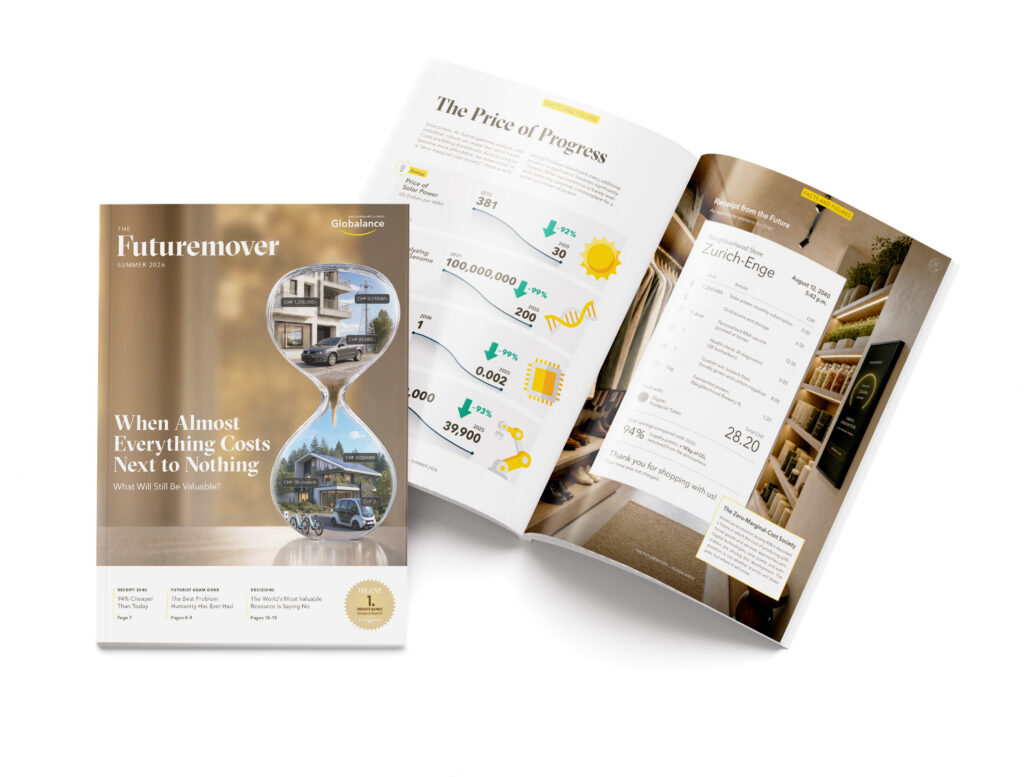
Discover the entire issue
Read more articles from our current issue: ‘When Almost Everything Costs Next to Nothing’.
Be part of the solution and stay informed with the Futuremover.
Subscribe now and shape the future!
Magazin abonnieren EN
"*" indicates required fields