News & Trends
Abundance and Scarcity: An Eternal Dance

Value is constantly shifting. What was scarce and valuable yesterday may be abundant today, and vice versa. In the near future, value could shift dramatically once again. We are already witnessing the beginning of this change.
Zurich, 1905: Fourteen-year-old Martha breathes in the scent of her Christmas present with delight: a clove-studded orange. The fruit is a symbol of prosperity and a rare luxury for Martha. Today, thanks to industrial agriculture and modern refrigeration and transportation networks, Switzerland imports around 74,000 metric tons of oranges each year. There are more than enough to go around. A clove-studded orange under the Christmas tree would probably make today’s teenagers turn up their noses. Pokémon cards, on the other hand, might delight them. When everything is available at any time, people create new forms of value.
Martha knows nothing of this. Slightly bored, she sits down on a park bench and absentmindedly flips through a book. Today, we call that mindfulness and pay money for it. Whether it is a yoga retreat or a digital detox, complete peace and a genuine experience of nature have become lucrative luxuries of the 21st century. Boredom? We barely know what it is.
What was once scarce is now abundant, while things that used to be everywhere have become rare. Industrialization, automation, and digitalization have driven many of the shifts in value over the past century. They continually create new forms of abundance, but also new forms of scarcity. In doing so, they repeatedly redefine both price and value.
What Determines Value?
The formula sounds simple: Value is tied to supply and demand. Scarce things are usually valuable, while abundant things tend to lose value. But scarcity alone does not automatically create demand. Something must also be relevant. That relevance is often psychological. Rare Pokémon cards, for example, now sell for millions. To Martha, they would have been worth little more than the paper they were printed on.
Rapid technological developments over the past century have radically shifted supply and demand, abundance and scarcity. What shifts will come next?
It Is a Paradox
It feels as though everything is becoming more expensive. Yet we are living in a period of historically unprecedented prosperity. This is the paradox of abundance: The more we have, the less we may be able to use. Abundance can make access more difficult. Martha knows this problem too. When her paint box is overflowing, she cannot find the brush she needs. When she reduces it to the essentials, everything is immediately within reach.
The new abundance is availability. Energy, food, goods, and even lithium or water exist in principle. They are simply not always where we need them. The real scarcity lies in transferring them through roads, mines, and cables.
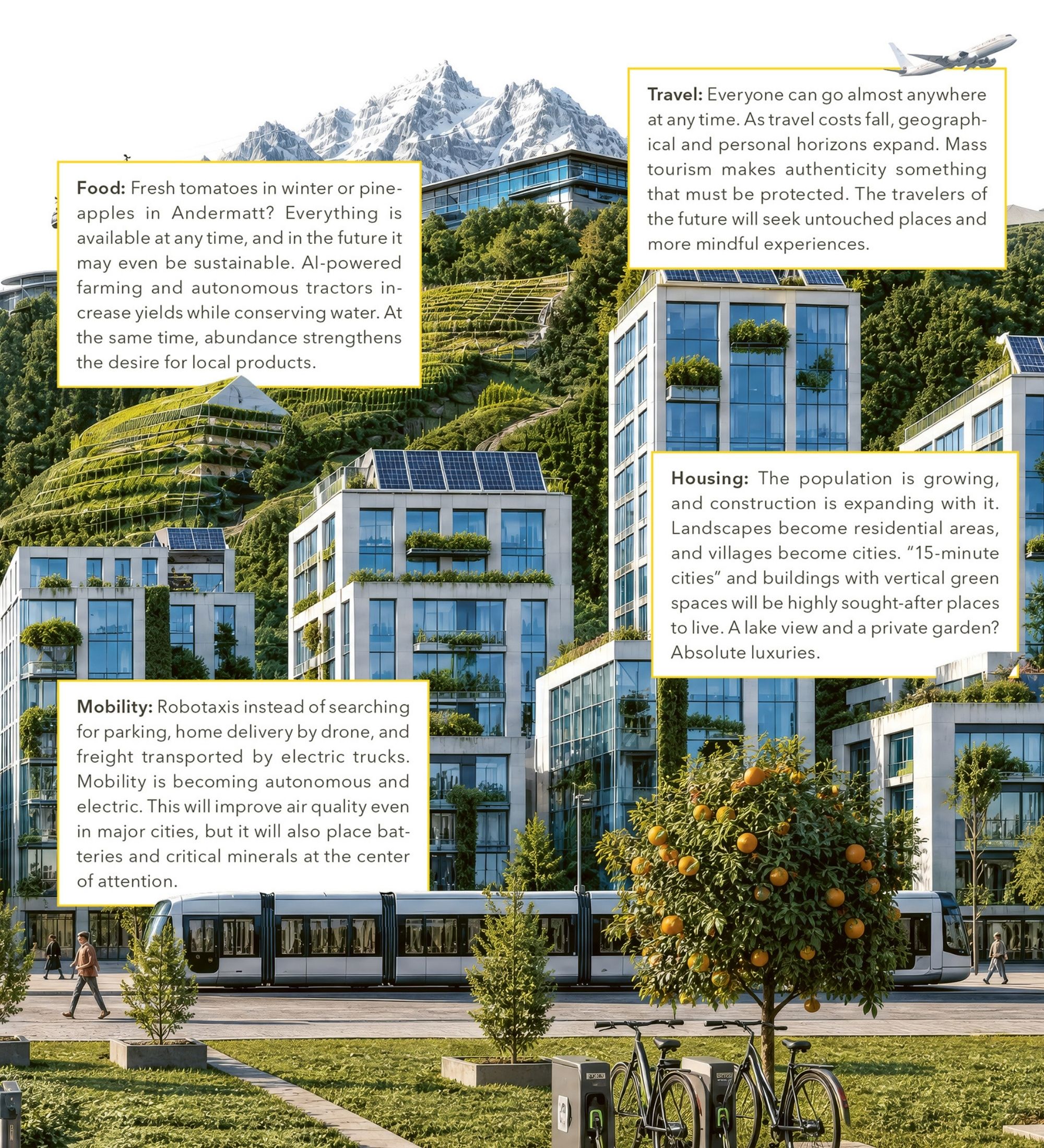
Alternative energy sources could bring electricity costs close to zero. Large-scale recycling programs could provide every region with affordable access to rare minerals. Autonomous electric vehicles could completely reshape our daily lives and even the way we use living space. AI could revolutionize care, pharmaceuticals, and medicine.
This brings us closer to a world in which many things cost almost nothing. What happens then? An entirely new kind of scarcity emerges. Value shifts toward what cannot be scaled, such as trust, quality, and human experience.
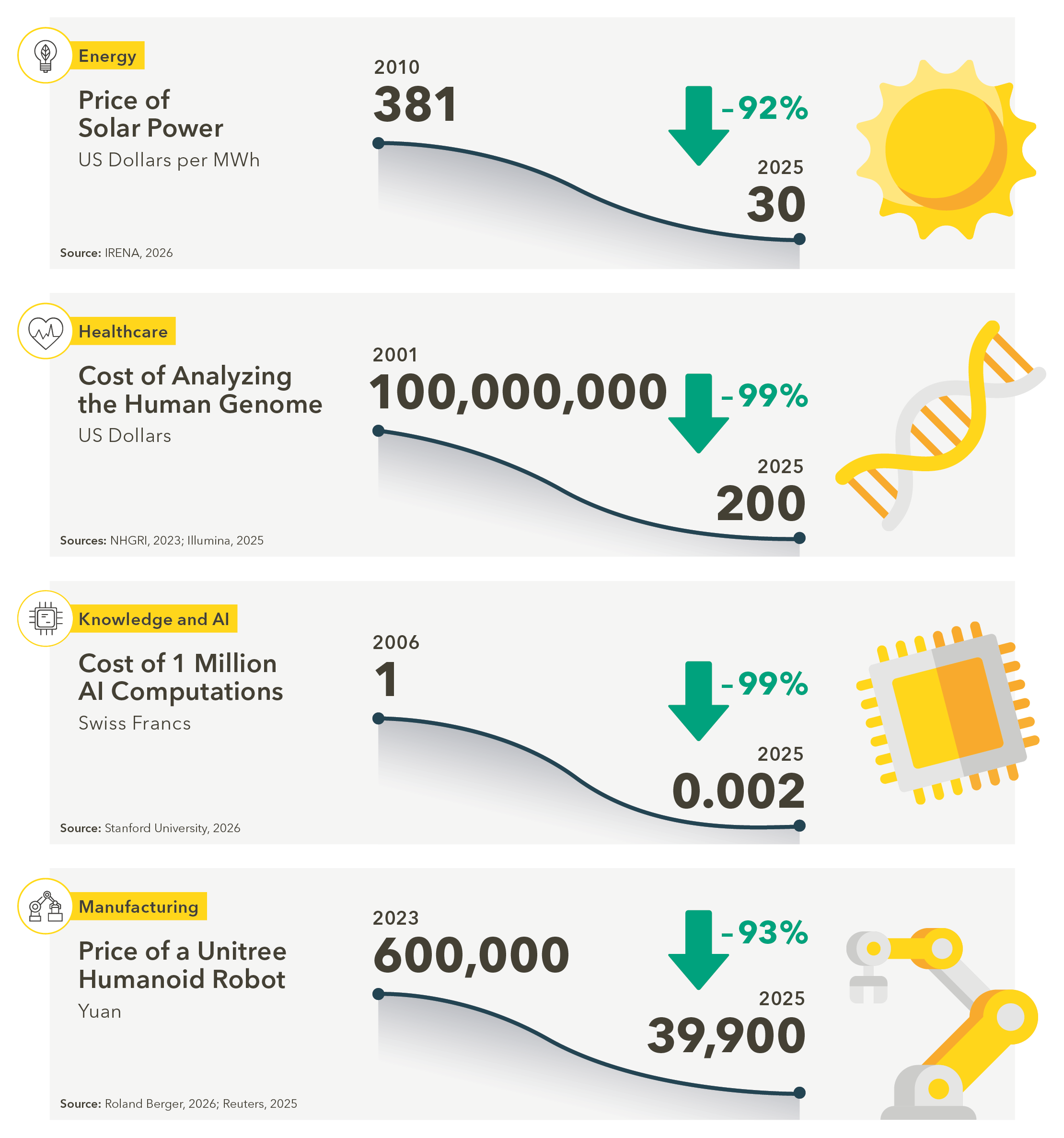
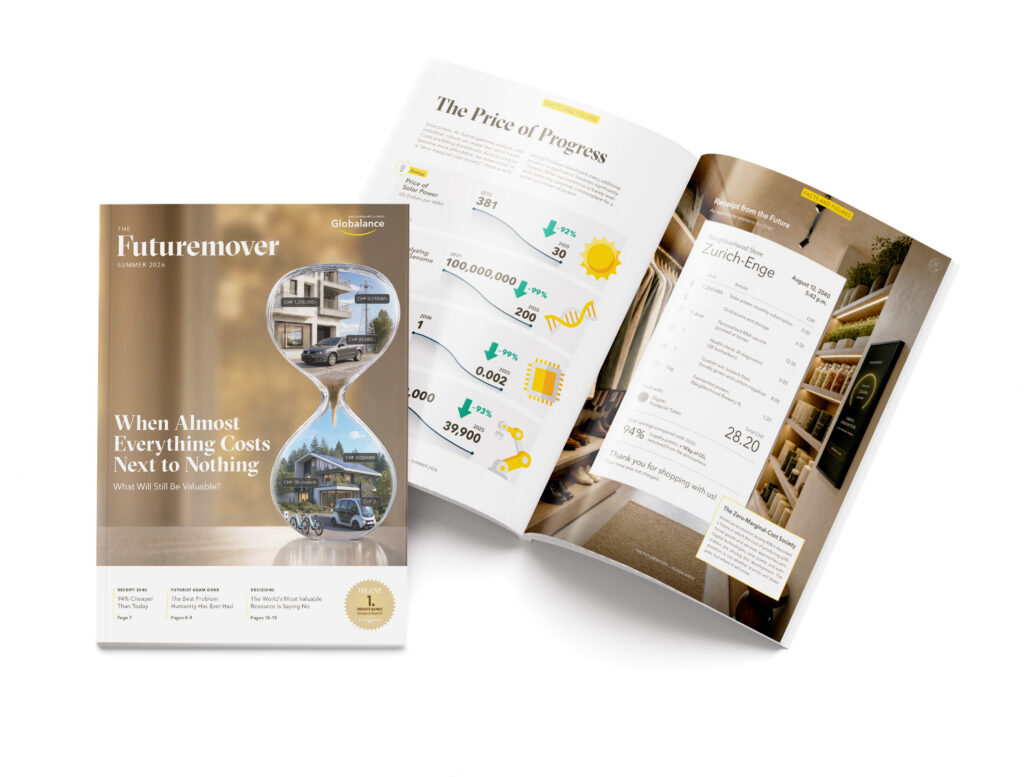
The Price of Progress
Solar power, AI, human genome analysis, and industrial robots all reveal the same trend: Costs are falling dramatically.
As technologies become more affordable, a “zero-marginal-cost society” moves closer. Once a technology has been developed, every additional product or application becomes significantly cheaper.
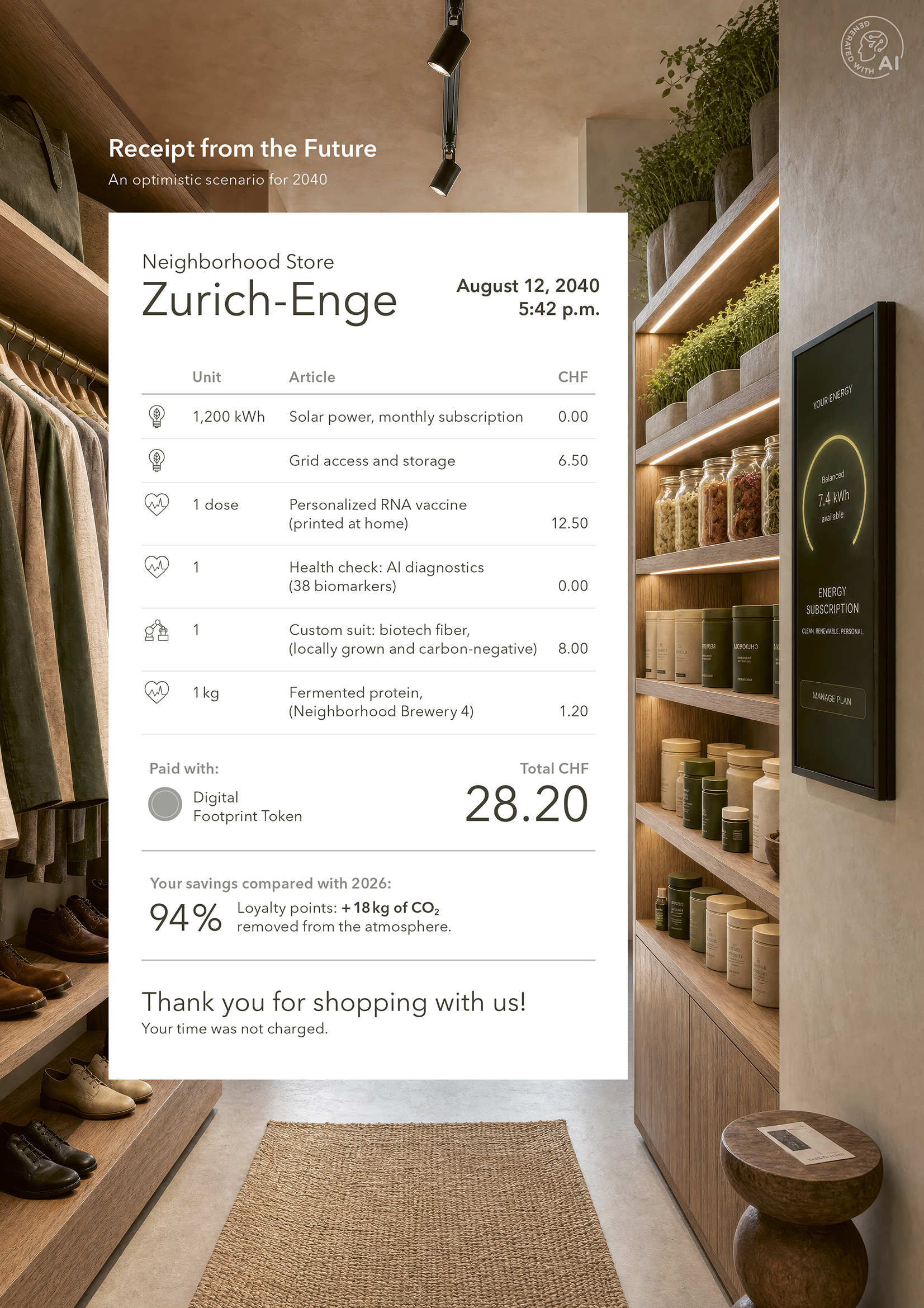
Receipt from the future
What was expensive or barely available yesterday becomes commonplace for a growing number of people.
The Zero-Marginal-Cost Society
American economist Jeremy Rifkin describes a future in which the cost of producing additional goods and services approaches zero. Digital technologies, solar power, and automation are driving this development. The question is not whether scarcity will disappear, but where it will move.
Discover the entire issue
Read more articles from our current issue: ‘When Almost Everything Costs Next to Nothing’.
Be part of the solution and stay informed with the Futuremover.
Subscribe now and shape the future!
Magazin abonnieren EN
"*" indicates required fields