News & Trends
The World’s Most Valuable Resource Is Saying No

Good decisions do not necessarily come from having more information. They come from knowing what to leave out.
A supermarket, the olive oil aisle. A customer reaches without hesitation for a bottle in the second row on the left, halfway up the shelf. It is the same bottle she always buys. She does not compare prices or check its origin, acidity, or reviews. What looks like a habit is actually a smart strategy. At some point, her choice proved reliable, and she has not needed to compare alternatives since.
Ralph Hertwig, one of the world’s leading decision researchers, calls such shortcuts heuristics: simple rules that help us remain capable of acting even in complex situations. The greater the choice, the more important it becomes to distinguish what matters from what does not, particularly in a world of abundance.
People have used heuristics for thousands of years. Even the libraries of antiquity, including the Library of Alexandria, contained more knowledge than any one person could ever process. Anyone seeking direction had to decide what to read, whom to trust, and what to ignore. What is new is primarily the speed at which information is created and distributed.
Smart Shortcuts
For a long time, people assumed that good decisions required as much information and as thorough an analysis as possible. Hertwig’s research presents a more nuanced picture. A few indicators are often enough to make a good decision.
The search for the best comes at a cost of its own: time, energy, and often satisfaction.
Prof. Dr. Ralph Hertwig
Taxi drivers in New York know this as well. Passengers there can simply hail a cab from the street, and drivers must decide within seconds whom to let inside. Their personal safety may be at stake. Experienced drivers pass simple rules on to newcomers. For example, passengers wearing a winter coat in the middle of summer, possibly to conceal a weapon, are better left outside. This heuristic works because it is based on accumulated experience. In everyday life, however, we sometimes find it difficult to stop once we have found a good solution.
One Minute
Firefighters make 80 percent of their decisions within one minute. Rather than weighing every option at length, experienced emergency responders recognize patterns and rely on proven solutions.


Heuristic
Nobel Prize winner Harry Markowitz developed a complex model for allocating assets. For his own retirement investments, however, he used a simple rule of thumb: he divided his money equally among the available options.
Good Enough Rather Than Perfect
When scrolling through hotel listings or looking at new laptops, it is often difficult to stop. There might still be something better. One more page, one more comparison, one more review. Psychologists call people who think this way maximizers. They do not simply want a good solution. They want the best one.
Satisficers, by contrast, stop searching once they find something that is good enough. This does not mean they lack ambition. They have recognized that the search for the best comes at a cost of its own: time, energy, and often satisfaction. Maximizers do not necessarily make better decisions than satisficers. They are more likely to question their choices and regret them afterward.
In a world of almost unlimited choice, this insight is becoming increasingly valuable. The real challenge is not gathering information. It is knowing when to stop.
Hardly anyone is always a maximizer or always a satisficer. Someone who is a perfectionist when buying a home may be perfectly satisfied with good enough when choosing dinner or olive oil.
Currency: Attention
Many digital platforms depend on holding our attention for as long as possible. More time on YouTube or TikTok generally means more advertising revenue, more data, and more influence. Information is not scarce. Attention is.
As abundance grows, guidance becomes increasingly important. Those who help make relevant information visible create new social and economic value.
Artificial intelligence could intensify this development or help mitigate it. It can filter information, reveal connections, and provide guidance. At the same time, it can generate new content within seconds. It has never been easier to produce knowledge, yet it has also never been more difficult to distinguish what matters from what does not. The crucial question is therefore whether we can find better ways to manage information.
The customer in the olive oil aisle knows nothing about heuristics or decision research. Yet she relies on what has worked before.
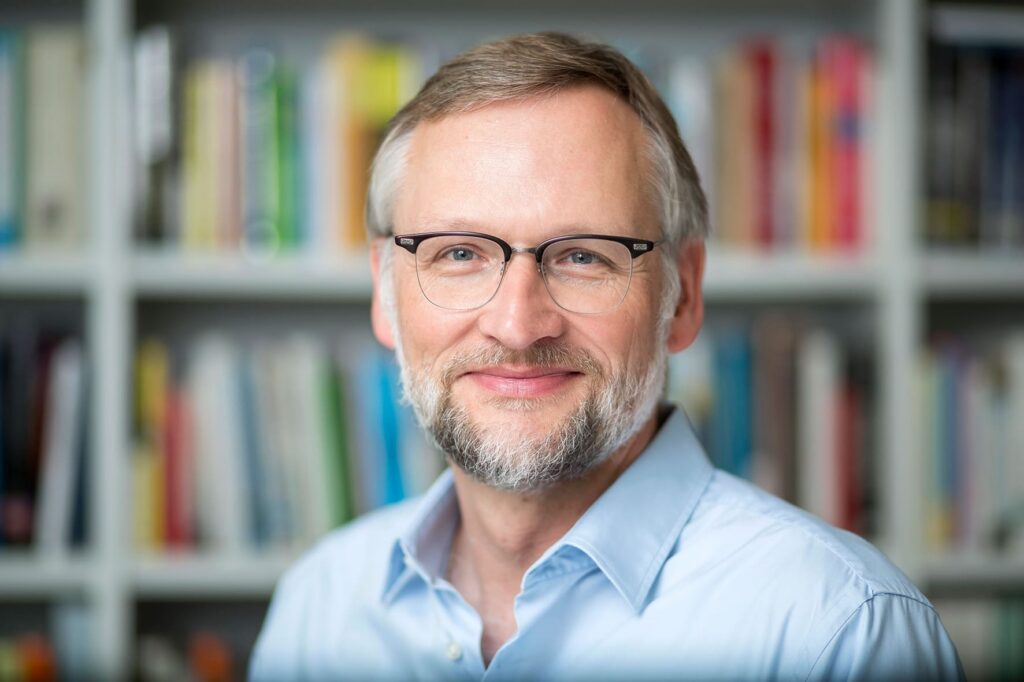
Prof. Dr. Ralph Hertwig
is one of Europe’s leading decision researchers. At the Max Planck Institute for Human Development in Berlin, he studies how people make judgments and decisions under uncertainty.
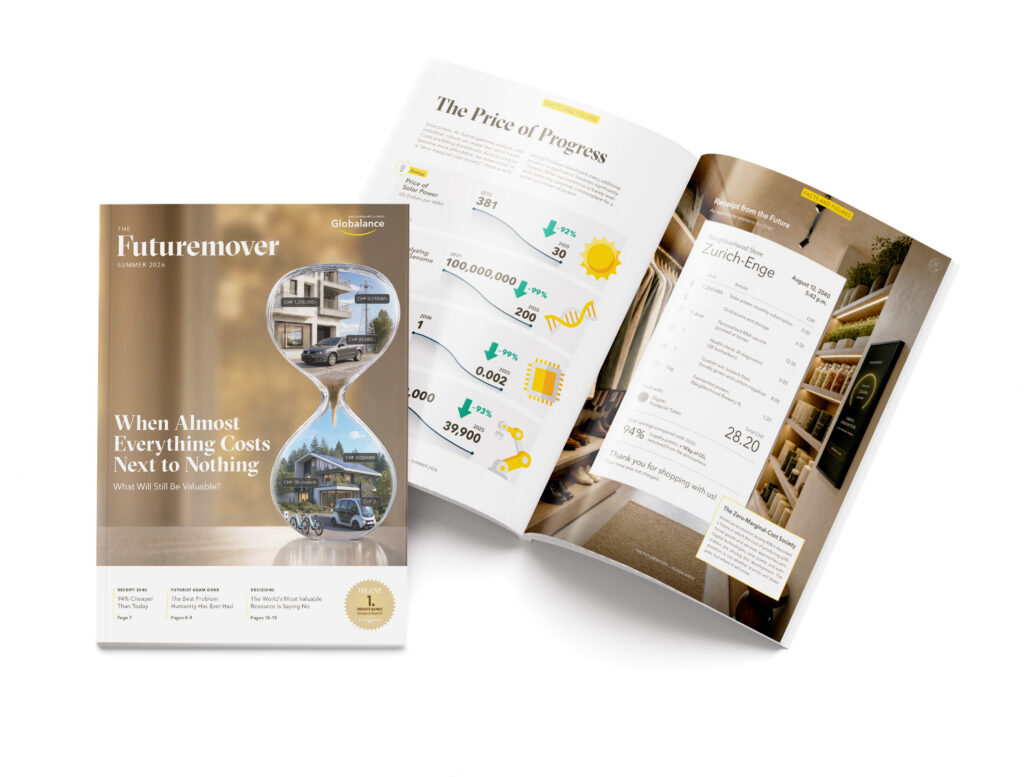
Discover the entire issue
Read more articles from our current issue: ‘When Almost Everything Costs Next to Nothing’.
Be part of the solution and stay informed with the Futuremover.
Subscribe now and shape the future!
Magazin abonnieren EN
"*" indicates required fields