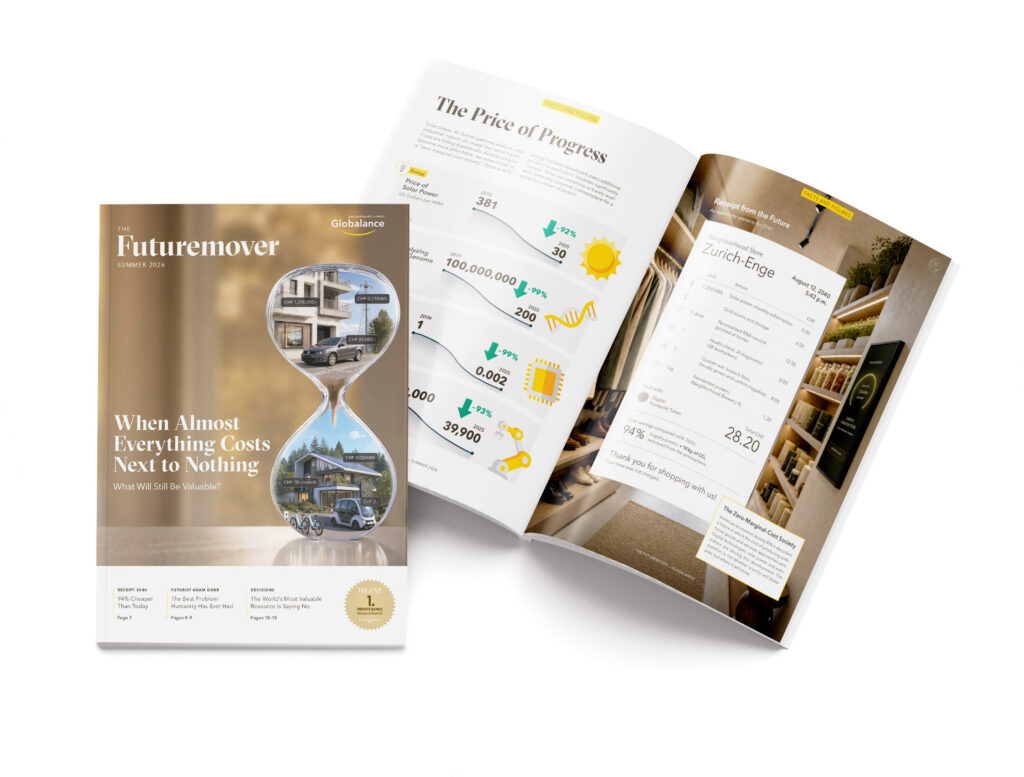
The Futuremover – Spring 2026
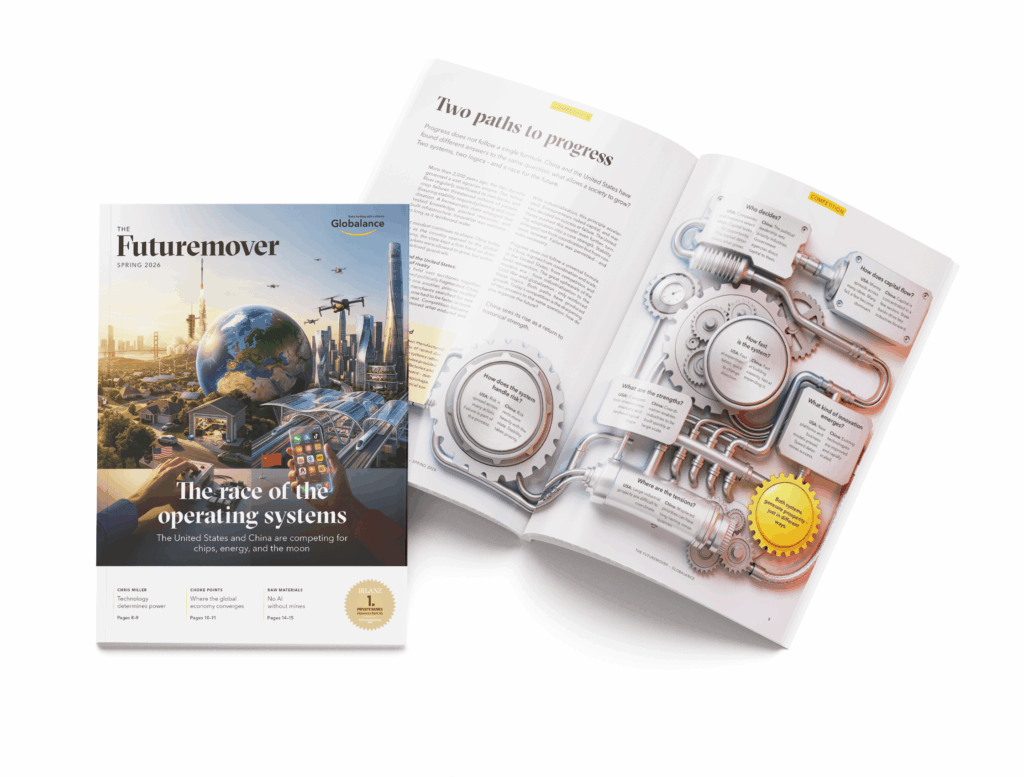
The race of the operating systems
Discover the latest issue now
In a world shaped by AI, remaining
human will become the decisive competitive advantage.
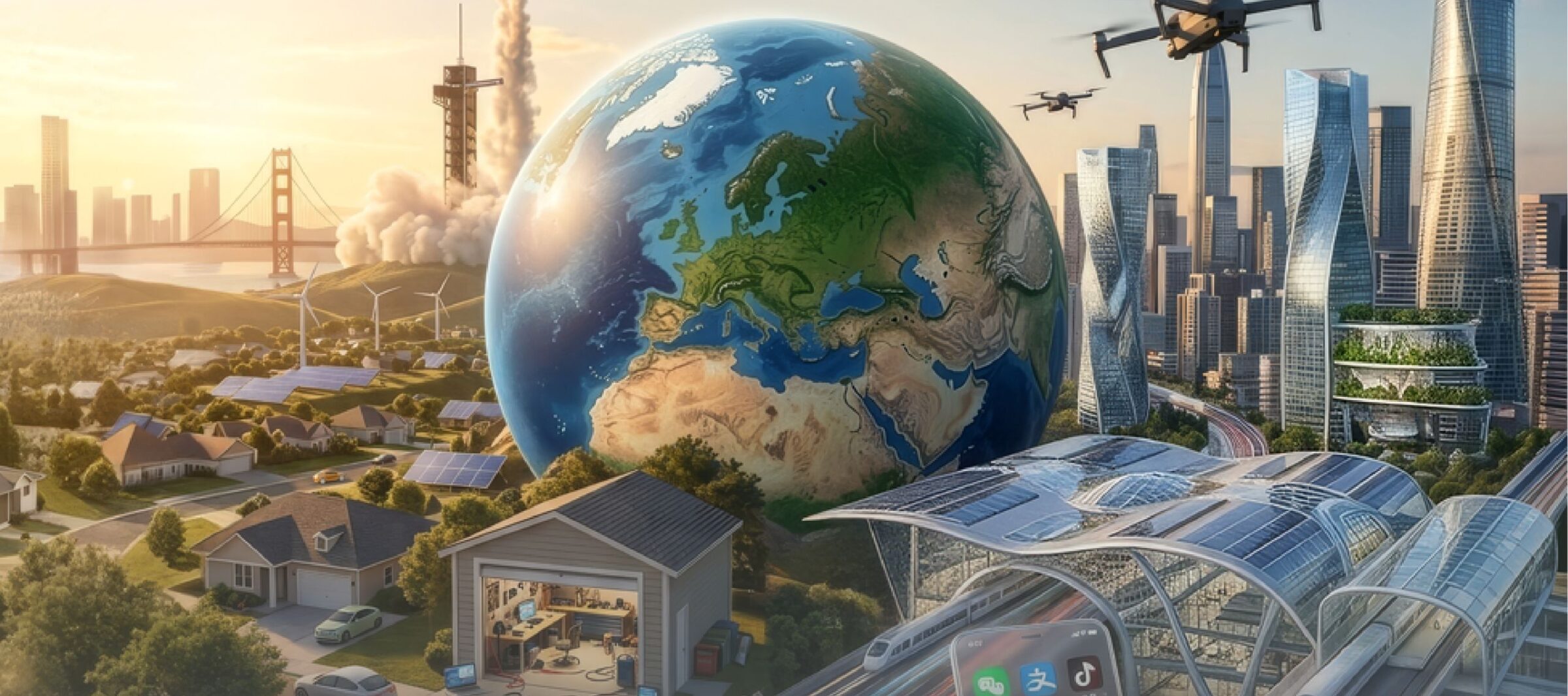
The technological race between the United States and China is reshaping the global balance of power. From orbit to critical mineral mines to the data centers of AI giants, the rules of power are increasingly written in algorithms.
Yet Europe does not have to remain on the sidelines.
As one of the world’s largest economies, Europe has the power to set its own course. True innovation requires more than pure logic.
Two paths to progress
Progress does not follow a single formula. China and the United States have found different answers to the same question: what allows a society to grow? Two systems, two logics – and a race for the future.
«Industrial policy is the new defense strategy»
Chips, batteries, artificial intelligence: governments are increasingly helping shape the technologies of the future. Since the 1990s, semiconductor manufacturing has increasingly moved to Taiwan, South Korea, and China. The United States and Europe are now trying to rebuild their own production capacity. Historian and bestselling author Chris Miller explains why relying on the free market alone is no longer enough.

The coordinates of power
Power rarely reveals itself at first glance. It is anchored in ports, factories and the depth of the sea.

Architect of the new rules
In a world where countries are once again turning inward economically, the EU offers a model for successful transnational cooperation.

Who owns space?
Rocket launches, moon landings, and satellites: the United States and China are competing for space. What does that mean for our lives?


«Courage is clarity in uncertain times»
Between Beijing and Zurich, Yuan Martschnig-Wei searches for what makes us human.
At the intersection of AI and society, she poses an urgent question: what does it mean to be human in the age of intelligent machines?
Green is the new gold
From eco-technology to an engine of growth: cleantech is the future – and China is miles ahead of the rest of the world.
Why is that? And how are the United States catching up in the race for the green crown?
«The EU model is becoming increasingly relevant»
What is Europe’s elevator pitch in the current dynamic between the US and China? What are Europe’s strengths and how has the rise of AI changed the dynamic?
Alicia García Herrero, a Senior Fellow at the European think tank Bruegel, explains how Europe can position itself in the growing rivalry between the United States and China.

The bottleneck of tomorrow
In the dust of mines and the heat of refineries, the pace at which the digital industry grows is decided. Four so-called critical minerals form the heart of modern batteries: lithium, nickel, cobalt, and graphite. Without these four materials, there would be no large-scale electrification, no mobile robots, and no storage for renewable electricity. What does that mean? New technologies emerge quickly – but new mines do not.
Take a look inside the magazine and sign up for free
"*" indicates required fields
Investing for the future
If you want to invest successfully and sustainably today, you need to consider megatrends and innovative companies. With Globalance, you are investing today in the future of tomorrow.

More Futuremover issues
Discover all past issues on exciting topics such as ‘How Healthy Will Our Future Be?’, ‘Living Space of the Future’ or ‘How entrepreneurs are shaping the world’.