News & Trends
Weapons Remain Excluded
Why the changing global security environment calls for reassessment — and why defence investments still do not belong in a future-oriented portfolio.
WHAT THIS IS ABOUT
The war in Europe, hybrid threats, cyberattacks, and geopolitical tensions have brought security and defence capabilities back into focus. Political and regulatory debates increasingly ask whether investments in the defence sector could, under certain circumstances, be compatible with future-oriented investing. The security environment has changed. But the fundamental question remains: Can an industry whose products are ultimately designed for the use or threat of force be part of a future-oriented portfolio?
THE CONTROVERSY
Part of the European debate now argues that security, resilience, and credible deterrence are prerequisites for peace and social stability. As a result, calls are growing to stop treating the defence sector as categorically incompatible with sustainability-related investments. The European Union has recently clarified its position and explicitly strengthened efforts to mobilize capital for defence capabilities.
At the same time, the ethical trade-offs remain significant. Military systems are ultimately designed for the use or threat of force, while concerns about transparency, end use, and human rights remain substantial.
The Globalance View
The changing security environment calls for a fresh assessment of the arguments. Globalance recognizes that national defence capabilities, the protection of critical infrastructure, and societal resilience have become more important again.
Nevertheless, we maintain that weapons and defence investments remain highly problematic from an impact perspective. Military systems are not constructive in the strict sense: their purpose is to deter through the credible threat or use of force. They also involve significant risks related to end use, exports, transparency, corruption, and human rights.
Future-oriented investing should continue to focus on solutions that enhance security, stability, and long-term resilience without relying on destruction as a means to achieve them.
What Does the Changing Security Environment Mean for Investors?
1. The global security environment has changed
Since 2022, it has become clear in Europe and beyond that security cannot be taken for granted. The European Union aims to substantially strengthen its defence readiness by 2030. In 2025, it created Security Action for Europe (SAFE), an instrument designed to mobilize up to EUR 150 billion in loans for defence capabilities.
Switzerland is also reassessing its security situation. In its 2025 Armed Forces Dispatch, the Federal Council explicitly points to capability gaps in command and control, sensor systems, ground operations, and cyber and electromagnetic domains.
2. The case for reassessment
One argument for reassessment is that national defence can be seen as a public good. Governments must be able to protect their populations, infrastructure, and democratic institutions. Some European policymakers and investors therefore argue that security and resilience are prerequisites for social sustainability.
In addition, the defence sector is no longer categorically excluded in every regulatory context. Political pressure to expand industrial capacity is increasing.
3. The case against investing in weapons
From an impact perspective, the arguments against weapons investments remain significant. Weapons do not contribute to civilian value creation. They are designed for deterrence, deployment, and potential destruction. Investors have no control over how military systems are ultimately used.
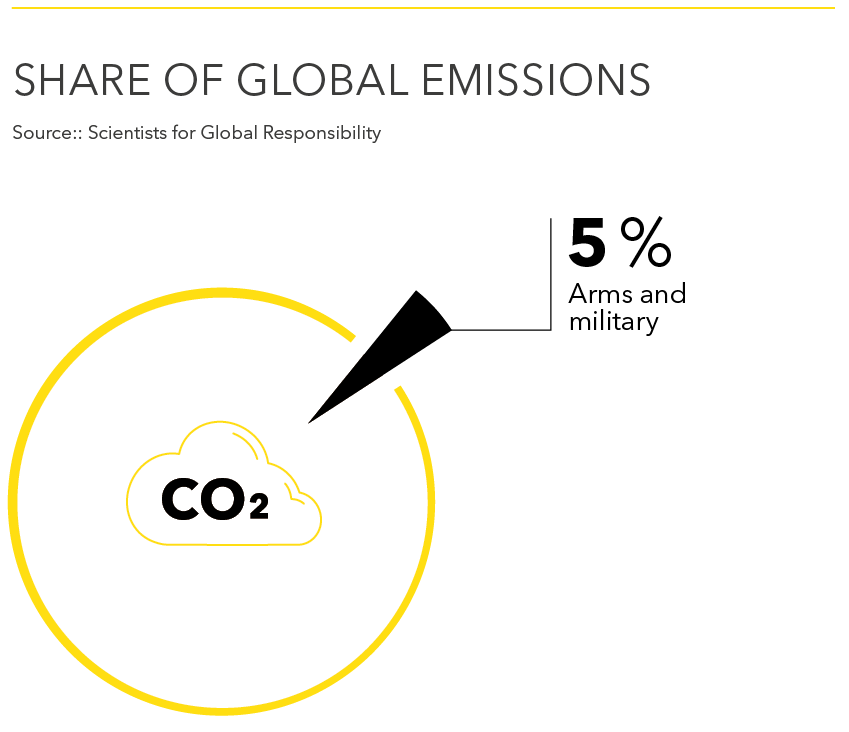
There are also risks associated with exports to problematic contexts, violations of international humanitarian law, corruption, limited transparency, and substantial reputational exposure. Environmental costs matter as well: militaries and the defence industry generate significant emissions and consume substantial resources.

Weapons are designed for deterrence, deployment, and potentially destruction. Investors have no control over how they are ultimately used.
The financial case is also less straightforward than recent market performance might suggest. The recent share-price performance of many defence companies may appear attractive at first glance. But the sector depends heavily on government budgets, political decisions, and a relatively small number of major customers. Prices, margins, and order volumes are therefore driven less by conventional market competition than by defence and budget priorities.
The sector is also cyclical. Historically, periods of rising defence spending have repeatedly been followed by longer periods of declining budgets. Long procurement cycles, high capital requirements, individual large contracts, and export approvals can also lead to significant swings in earnings.
Following the sector’s significant rerating since 2022, some expected increases in defence budgets are likely already reflected in share prices. For long-term investors, the risk-return profile is therefore not particularly compelling, even before ethical considerations are taken into account.
4. A practical perspective: diversification and «dual use»
AThe issue also becomes complicated in practice. Pure-play defence companies are relatively concentrated, making it difficult to build a broadly diversified portfolio based on them alone. More common are diversified industrial groups, suppliers, and technology companies with both military and civilian applications. This makes the distinction increasingly blurred.
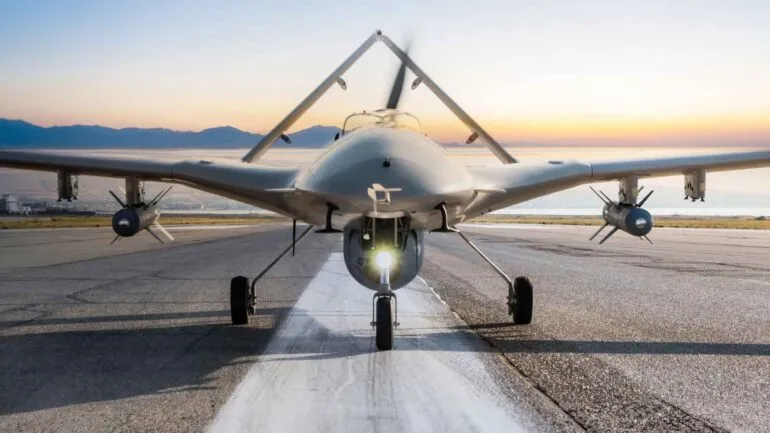
“Dual use” is a real and growing phenomenon, particularly in areas such as sensors, software, communications, cybersecurity, drones, robotics, and semiconductors. Analyses of dual-use technologies show how rapidly this field is expanding.
That is why the term “dual use” should not become a way to downplay the military purpose of certain systems or to automatically classify them as constructive solutions for the future.
Nokia Example: One technology, different use cases
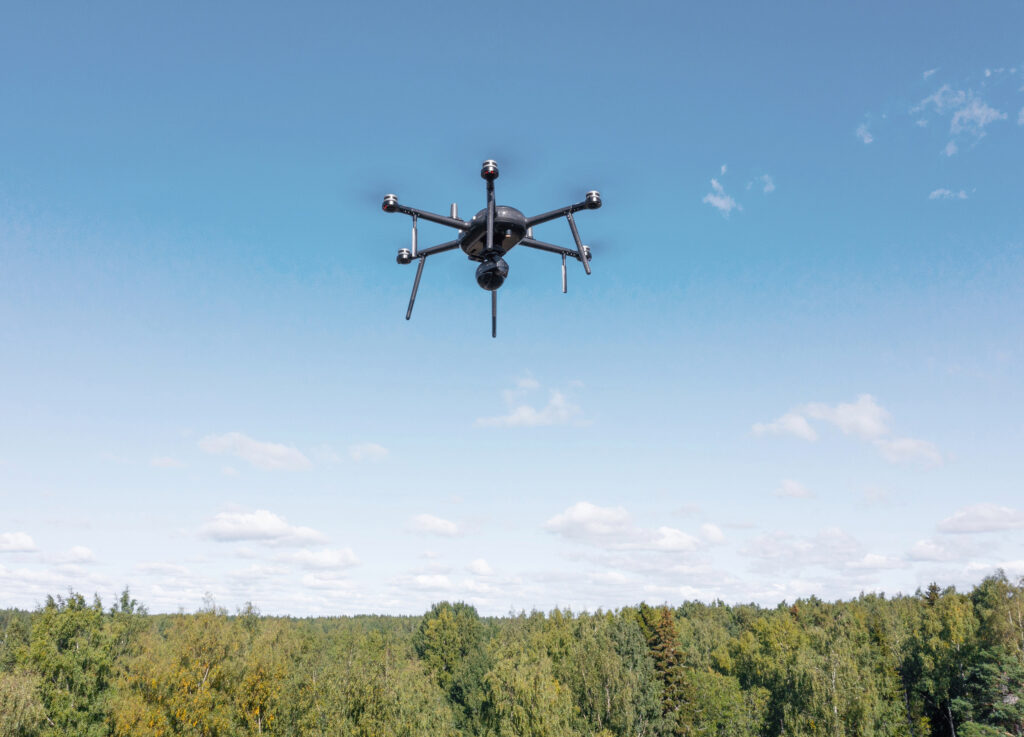
Nokia’s automated “drone-in-a-box” solution is used for applications including industrial site monitoring, inspections, and rescue operations. At the same time, the company offers communications solutions that can also be used for military purposes.
Nokia is therefore a good example of a technology company whose products cannot always be clearly classified as either civilian or military.
Implications for Future-oriented Investing
The changing security environment is not a reason to simply reclassify weapons investments as sustainable. Instead, it calls for more precise analysis, clear criteria, and careful judgment.
The financial perspective also matters. A sector whose demand depends heavily on political decisions by a small number of government buyers, is subject to pronounced budget cycles, and has reached high valuations following the recent market rally does not, in our view, offer a compelling basis for long-term investment from a risk-return perspective.
Globalance therefore continues to exclude weapons and defence investments from its investment approach. Our focus remains on investments that strengthen resilience, stability, and long-term sustainability without being destructive, including energy security, cybersecurity, infrastructure, health, education, and intelligent technologies.
We believe these areas offer a stronger way to combine positive societal impact with economic viability and long-term responsibility.
This article is for informational purposes only and does not constitute investment advice or a recommendation.

Be part of the solution and stay informed with The Futuremover.
Subscribe now and help shape the future!
Magazin abonnieren EN
"*" indicates required fields